




High-Frequency Words
Explore articles, free downloads, and practical instructional resources to support high-frequency word instruction that connects sounds, spellings, and meaning.
← Back to Search by Topic
Explore Free Resources
All resources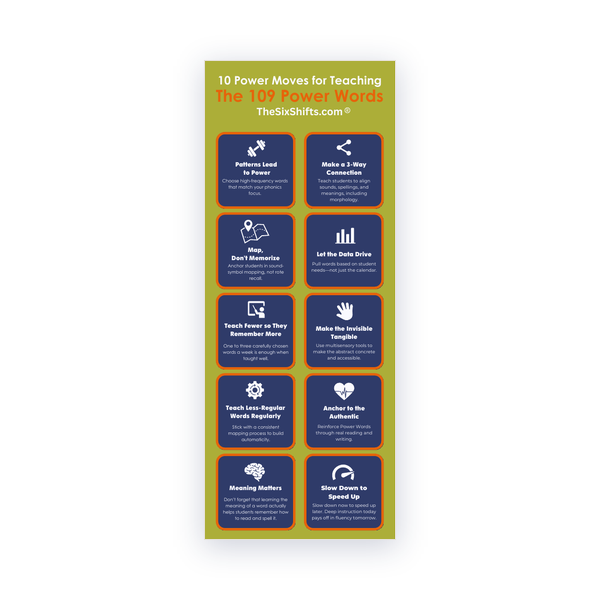
10 Power Moves for Teaching the 109 Power Words
Ten research-informed moves for teaching high-frequency words, from matching words to your phonics focus to letting the data drive which words you teach.
Get the resource →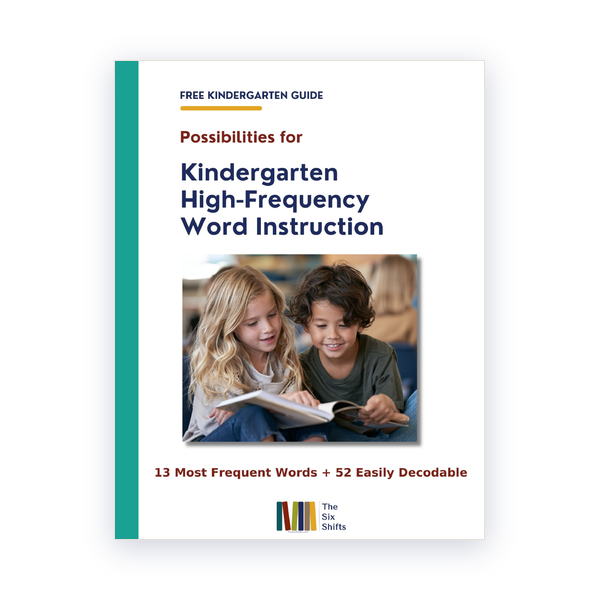
Possibilities for Kindergarten High-Frequency Word Instruction
A guide to selecting high-frequency words for kindergarten instruction, with two categories drawn from the 109 Power Words list.
Get the resource →
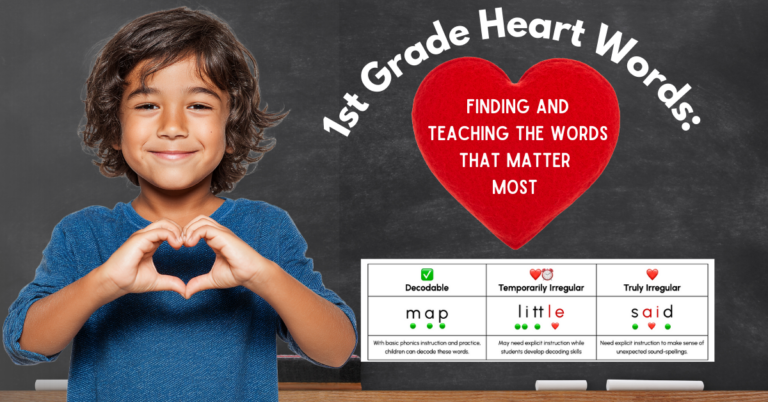
First Grade Heart Words: Finding and Teaching the Words That Matter Most
Take a closer look at which high-frequency words to teach in first grade and how phonics knowledge and unexpected spellings...
Read the article →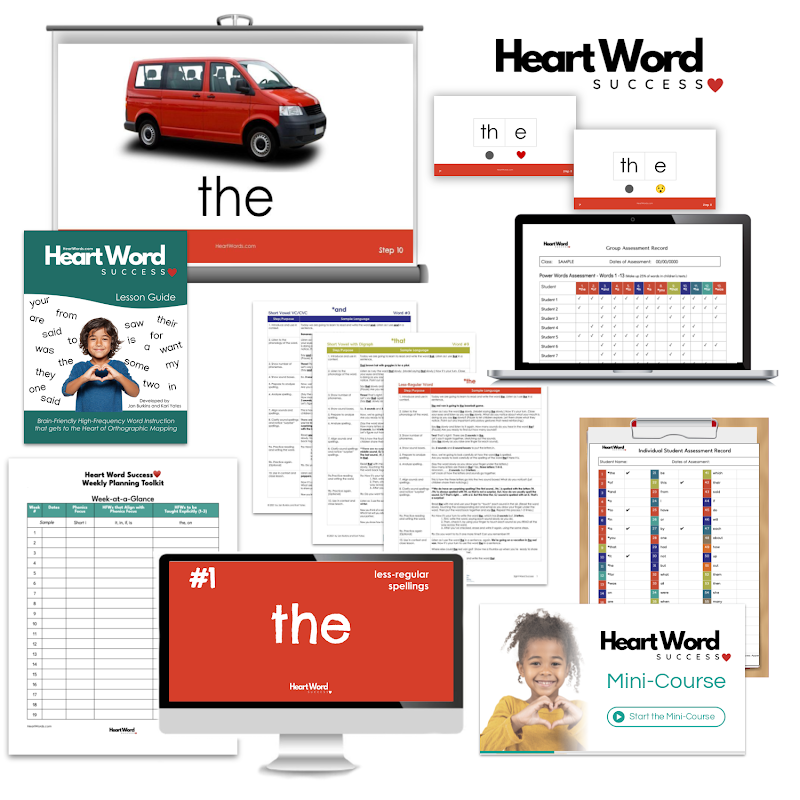
Heart Word Success
A 10-step flipbook lesson for all 109 high-frequency words, built on orthographic mapping.
Explore Heart Word Success →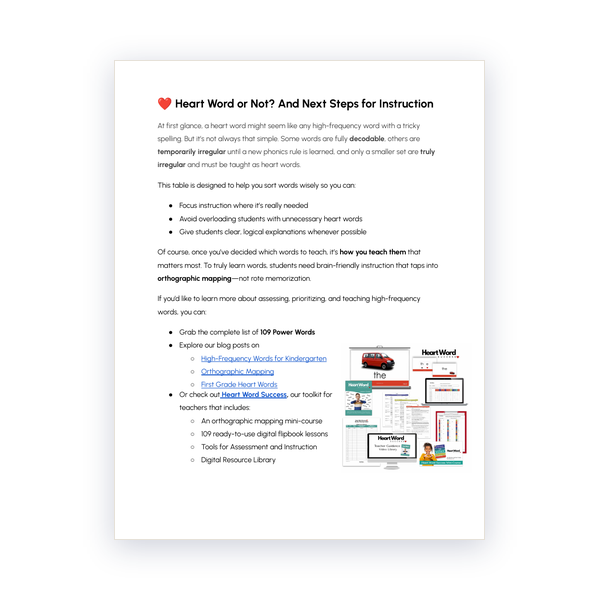
Heart Word or Not? And Next Steps for Instruction
A reference for considering which high-frequency words are decodable with students’ current phonics knowledge and which spellings need explicit attention.
Get the resource →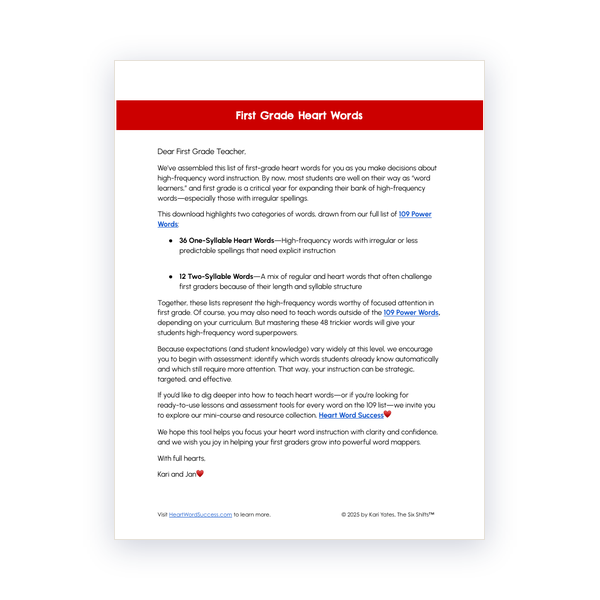
First Grade Heart Words
A word list to support planning for first-grade high-frequency word instruction.
Get the resource →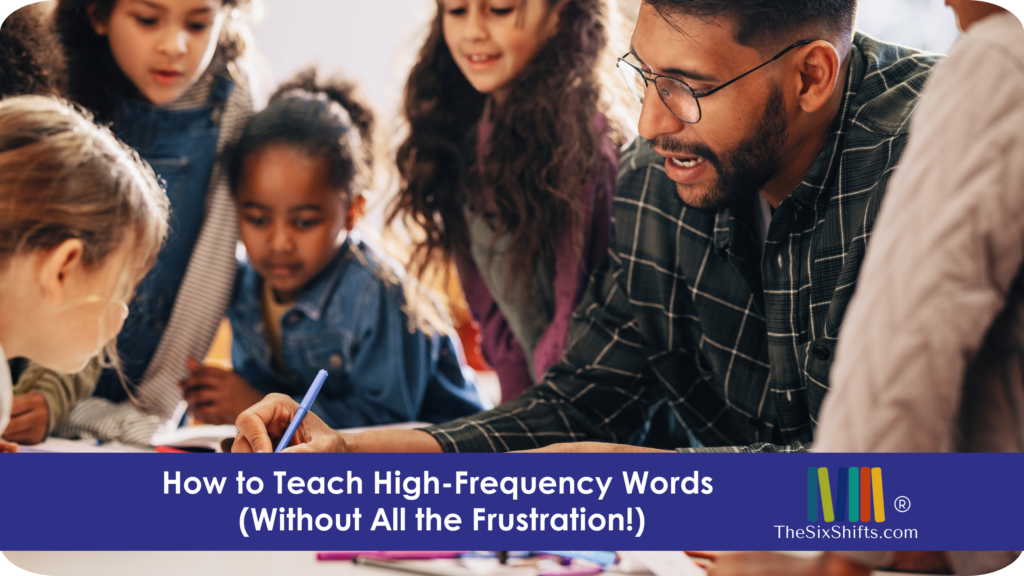
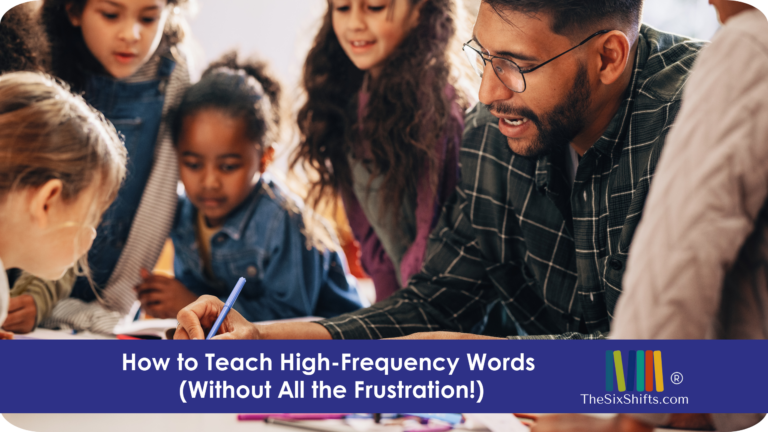
How to Teach High-Frequency Words (Without All the Frustration)
Help high-frequency words stick by connecting sounds, spellings, and meaning. Explore orthographic mapping and reconsider routines that rely on memorizing...
Read the article →
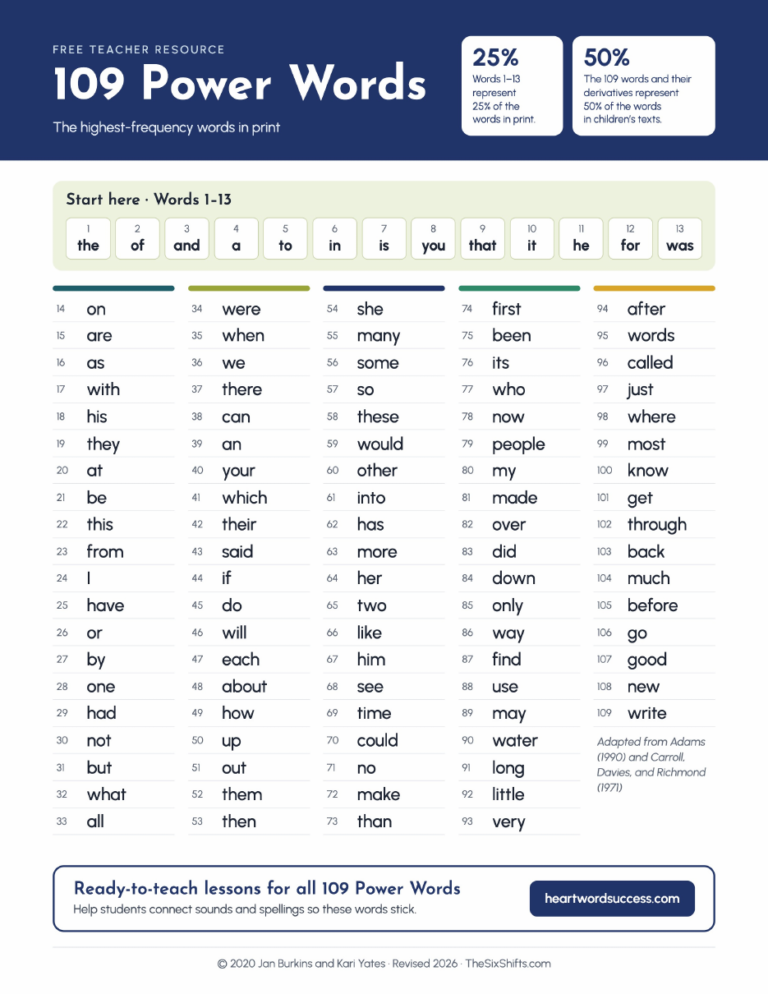
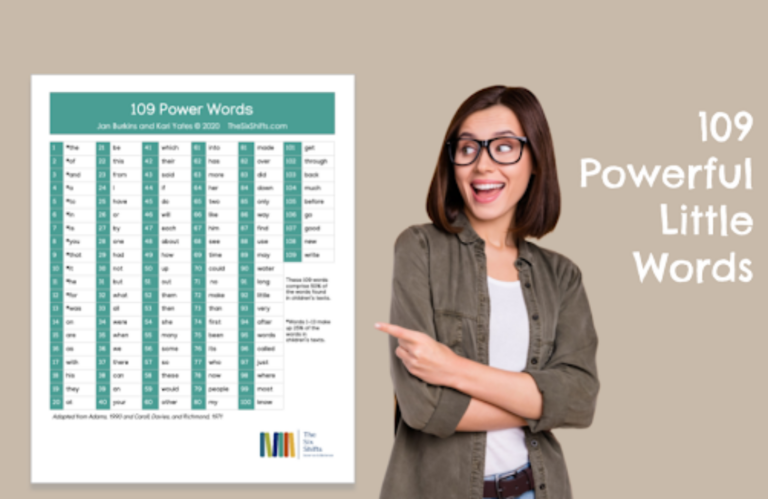
109 Power Words Download
A printable list of 109 high-frequency words that make up 50% of the words in children’s texts. The first 13...
Get the resource →
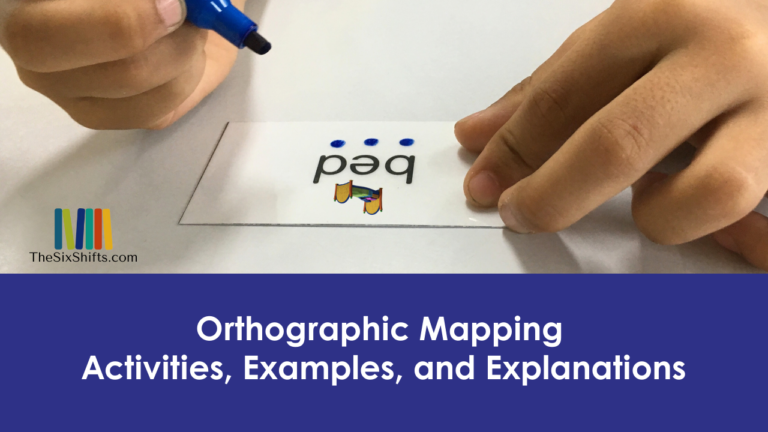
Orthographic Mapping: Explanations, Examples, and Activities
Explore how orthographic mapping helps readers store words for automatic recognition, with explanations, examples, and activities that connect spoken sounds...
Read the article →
Kindergarten Sight Words: Are We Trying to Teach Too Many?
Reconsider how many high-frequency words to teach in kindergarten, which words deserve priority, and how to connect instruction with students’...
Read the article →
Shifting the Balance: Beginning Readers
K–2 teachers, reading specialists, coaches, and teams supporting beginning readers.
Explore the online class →
Sight Words vs. High Frequency Words | Still Confused About the Difference? – You Aren’t Alone
Clarify the difference between sight words and high-frequency words, and consider why the distinction matters when choosing words and planning...
Read the article →
4 Things that Might Surprise You About ❤️ Heart Words
Take a closer look at heart words, unexpected spellings, and what students need beyond marking letters to build lasting word...
Read the article →
Sight Word learning in 1-4 exposures! That’s crazy talk! Or is it?
Consider why some readers learn words in very few encounters, and how orthographic mapping makes those encounters productive.
Read the article →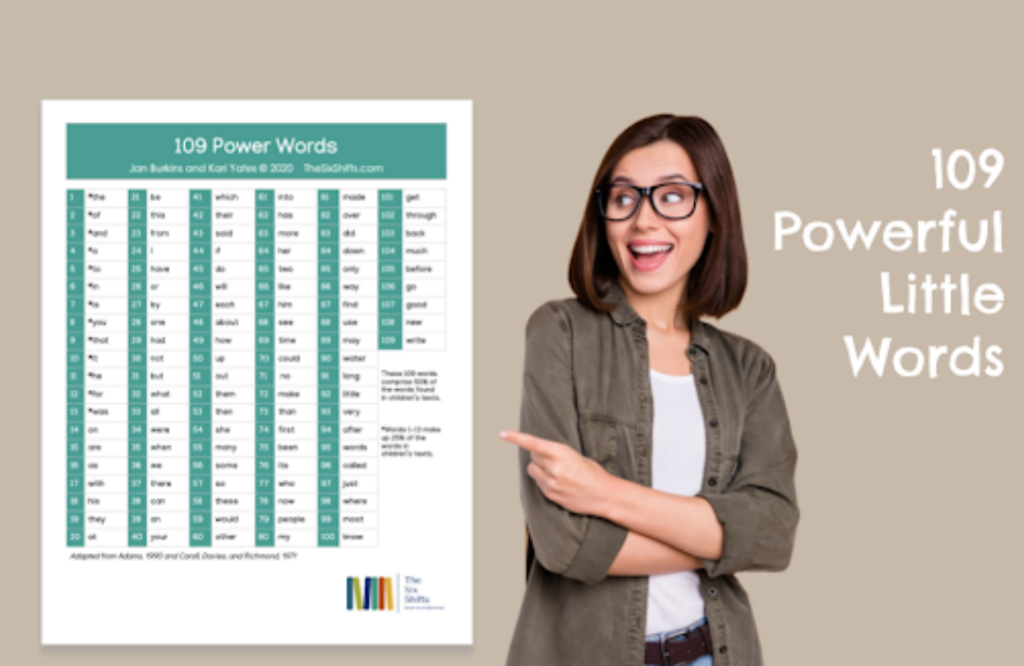
Looking for a bit of ✨magic✨in your sight word instruction? Start here!
Explore the thinking behind effective high-frequency word instruction and how connecting sounds and spellings helps make words stick.
Read the article →
“But you KNOW that word!” Sound familiar?
Reconsider familiar high-frequency word memorization routines and explore why a word that seemed learned yesterday may still be unfamiliar to...
Read the article →
Confused about the difference between sight words and high-frequency words? This can help.
Untangle two terms often used interchangeably, and consider how understanding sight words and high-frequency words helps us make sense of...
Read the article →Tools & Classes for Teaching High-Frequency Words
Explore classroom tools and professional learning designed to support high-frequency word instruction.
Heart Word Success
A 10-step flipbook lesson for all 109 high-frequency words, built on orthographic mapping.
Explore Heart Word Success →Shifting the Balance: Beginning Readers
K–2 teachers, reading specialists, coaches, and teams supporting beginning readers.
Explore the online class →The Shift in a Nutshell
In Shifting the Balance (K–2), Shift 4, “Revising High-Frequency Word Instruction,” names a common practice to reconsider: “Taking a “just-have-to-memorize-them” approach to teaching high-frequency words.” The shift it recommends: