
You’ve probably used word chains before.
They look simple enough.
A student writes pan.
Then you say, “Change pan to pat.”
Three letters. One tiny change.
But think about everything the student has to do before that new word appears on the page:
- 1.Say pan and pat and listen for where they differ.
- 2.Locate the sound that changed: the end of the word.
- 3.Identify the change: /n/ becomes /t/.
- 4.Decide how to spell /t/.
- 5.Change the n to a t.
- 6.Read pat and check: Does the word I made match the word I heard?
Six little decisions.
For one three-letter word.
And yet, with enough practice, students begin to do all of that in just a few seconds.
That may be the most important thing to understand about word chains.
The chain isn’t really the list of words. The chain is the thinking students do between one word and the next.
What Is a Word Chain?
A word chain is a sequence of words in which just one phoneme changes at a time.
For example:
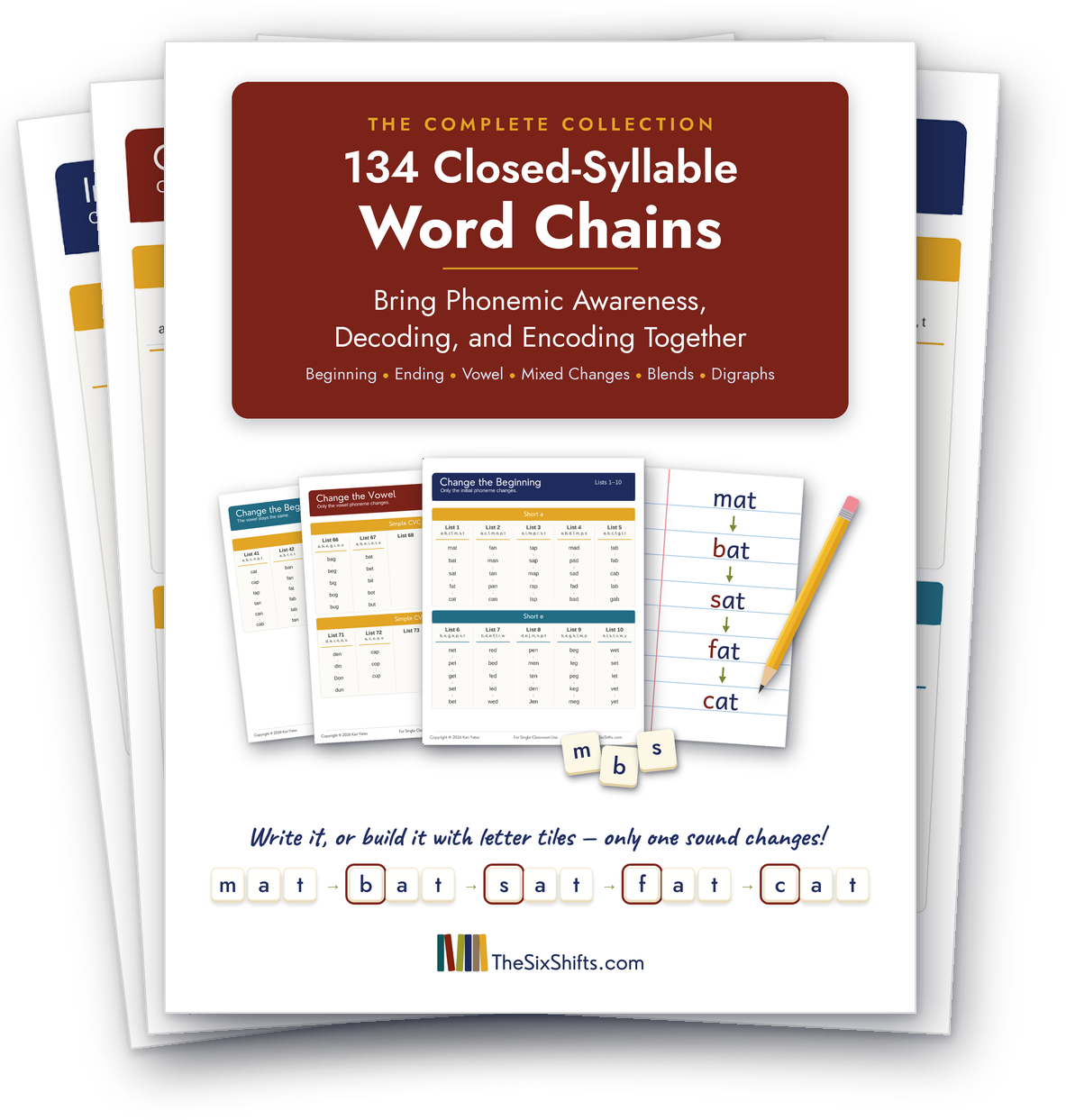
mat → bat → sat → fat → cat
In this kind of chain, each move involves a sound swap: one phoneme comes out, and another takes its place while the rest of the word stays put.
That “everything else stays the same” part matters.
Instead of rebuilding an entirely new word each time, students have to pay close attention to exactly what changed and exactly what didn’t.
Word Chaining: The Routine
The routine itself is wonderfully simple:
Listen → Say → Compare → Change → Check
Listen to the new word.
Say it.
Compare it with the word that’s already there. What stayed the same? What changed?
Make the change.
Then read the new word and check it against what you heard.
That’s it.
The routine stays steady while the words change.
And because students know what to expect, more of their attention can go toward the actual work of listening to, analyzing, spelling, and reading the word.
A Lot Is Happening, Even with Simple CVC Word Chains
Go back to pan → pat.
In those few seconds, students are moving back and forth among several important processes.
Phonemic awareness
They have to hear that pan and pat differ by one sound and identify exactly where that difference occurs.
Encoding
They have to connect the new sound, /t/, to the spelling that represents it and make the change.
Decoding
Once the new word is built, they have to read it.
Word analysis
They are attending closely to the internal structure of the word: what changed, what remained stable, and how the sounds and spellings line up.
That combination is part of what makes chaining so efficient.
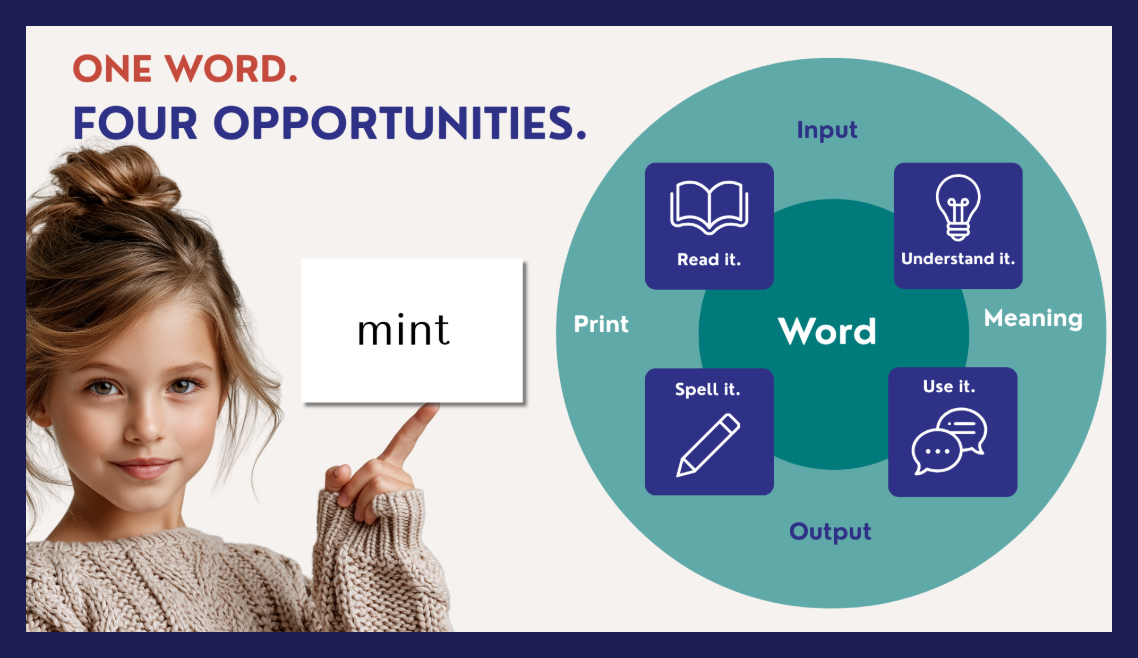
In just a few minutes, students repeatedly move between hearing, analyzing, spelling, changing, and reading words.
Word Chains: Formative Assessment, Too
Word chains aren’t only useful practice for students.
They can also give us a surprisingly clear window into what a student understands.
Because only one part of the word changes at a time, it’s often easier to see exactly where the work breaks down.
As you watch and listen, you can ask:
- •Can the student hear what changed?
- •Can they locate where in the word the change occurred?
- •Can they connect the new sound to the correct spelling?
- •Can they hold onto the parts of the word that did not change?
- •Can they reread the new word accurately once the change is made?
The answer to each question suddenly tells you much more than “the student missed the word.”
Maybe the student couldn’t hear the phoneme change.
Maybe they heard it but didn’t know how to spell it.
Maybe they changed the wrong part of the word.
Maybe they built the word correctly but couldn’t read it back.
Those are very different instructional needs.
Word Chain Examples: The Type of Cue Changes the Thinking
One of the easiest ways to adjust a word chain is to change the kind of information you give students before they act.
Imagine the student has written pan and you want them to make pat.
“Change pan to pat.”
You give the whole new word.
The student has to compare the two words, find the difference, identify the new sound, decide how to spell it, and make the change.
Most of the thinking belongs to the student.
But other prompts are more supportive.
“Change the sound /n/ to /t/. What word did you make?”
Now you’ve identified the sound change.
The student still has to locate the sound in the word, connect /t/ to its spelling, make the change, and read the result.
But there’s a little more support to get started.
Even more supportive?
“Change the letter n to t. What word did you make?”
Now you’ve identified the exact letter change.
The student makes the change and reads the new word.
More support still.
The word list hasn’t changed. The routine hasn’t changed.
But the cognitive demand has.
That gives us a built-in scaffold: we can offer more information when a student needs it and gradually give more of the thinking back as they become more secure.
Word Chain Ideas: Three Different Ways to Do Word Chains
The materials we choose can change the experience, too.
Letters or tiles
With magnetic letters, letter cards, or tiles, the change is physical.
One letter comes away. Another takes its place.
That makes the idea of “change one thing and keep everything else” especially concrete and can be a helpful starting place.
Whiteboard
A whiteboard keeps the routine quick.
Erase one part. Write the new part. Read the new word.
There’s less setup than there is with a full set of tiles, but students still get the experience of modifying the word that’s already there.
Paper and pencil
With written chains, each new word can go beneath the last:
pan
pat
sat
sit
Now the earlier words remain visible.
Students can look back and compare.
And you have a useful formative assessment to look at afterward.
A written chain can become a small record of where the student hesitated, changed too much, confused a spelling, or began to work more independently.
None of these approaches is the “right” way to chain. Which you choose depends on two things.
What do you want students to notice?
What do you want to be able to see?
Why Does Word Chaining Work?
The research base is stronger for the skills inside word chaining than for word chaining as a named instructional routine.
But those underlying skills are well established.
It connects phonemic awareness to print.
Students aren’t manipulating sounds in isolation.
They are listening to the sounds in words while looking at, building, changing, and reading the letters that represent them.
That connection between phonemes and graphemes is essential.
It gives students repeated practice manipulating phonemes.
Substituting one sound for another requires students to pay very close attention to the internal structure of a spoken word.
And in a chain, they do that over and over.
It links reading and spelling.
Reading asks students to move from print to speech.
Spelling asks them to move from speech to print.
Word chains keep students traveling in both directions.
It can support orthographic mapping.
For a word to be securely stored in memory, the brain needs more than a quick visual impression.
The reader has to analyze how the word works: identify the sounds in the spoken word, connect those sounds to the letters or letter patterns that represent them, and ultimately connect that pronunciation and spelling to meaning.
Word chaining slows that analysis down just enough for students to notice the internal structure of words.
Then it asks them to do it again.
And again.
And again.
Over time, work that once required six deliberate little decisions can become faster and increasingly automatic.
That is the larger goal.
Not simply making the next word in the chain.
Helping students become readers who can look closely at a word, make sense of how it works, and eventually recognize it without having to work quite so hard.
Small Routine. A Lot to Notice.
Word chains are a particularly efficient way to bring several important kinds of word work together.
Students listen.
They compare.
They analyze.
They spell.
They decode and check.
And while they’re doing all of that, we get to watch closely enough to notice what they already understand and where they may still need us.
That’s quite a lot of mileage from changing the word pan to pat.
Want to Try It?
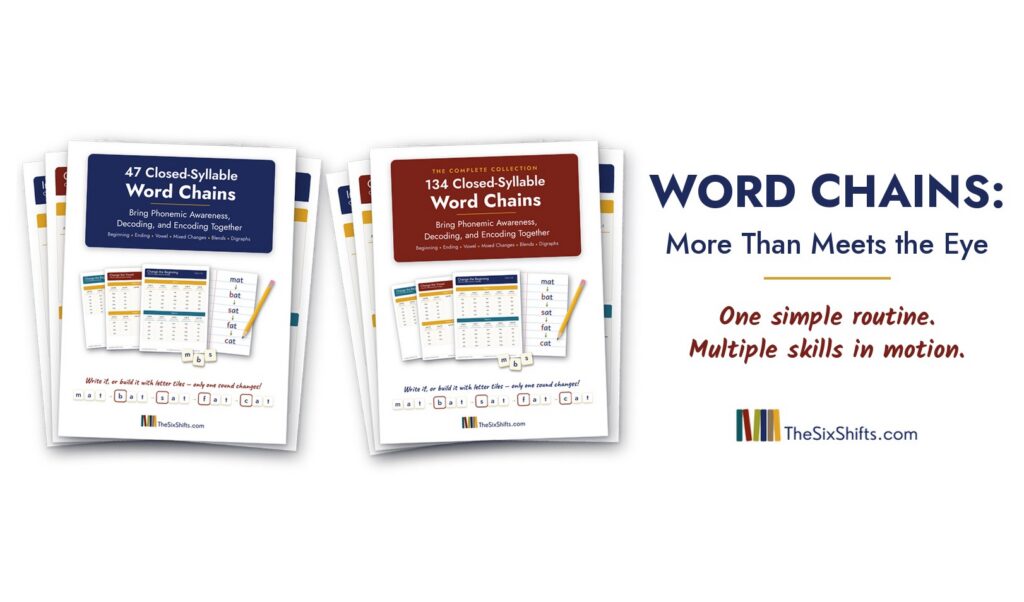
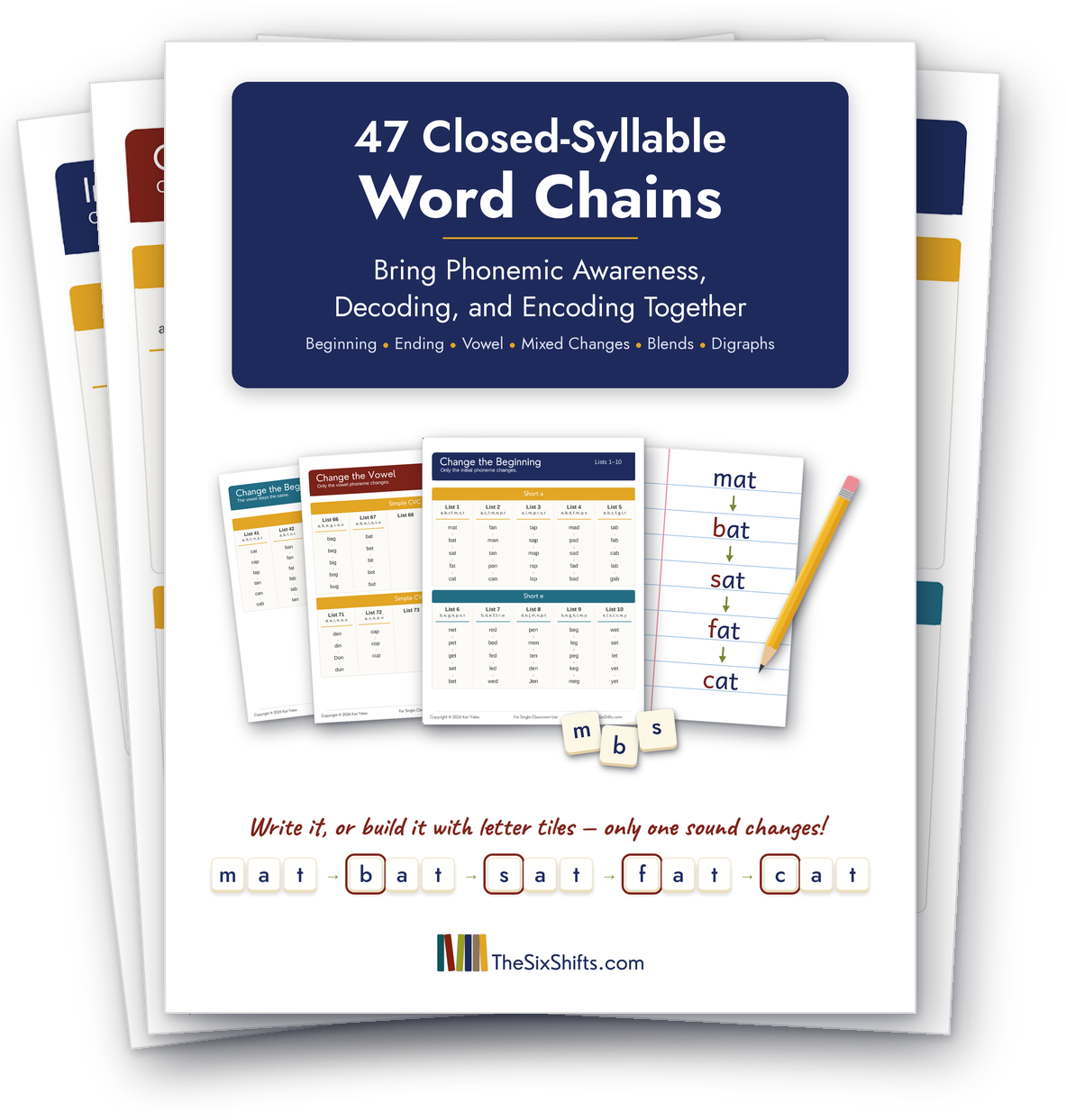
If you’d like to put word chaining to work without building all the lists yourself, we’ve created a free collection of 47 ready-to-use closed-syllable word chains across eight categories, along with guidance for choosing and using chains based on what students need.
And if you’d like even more chains to choose from, our complete collection includes 134 ready-to-use closed-syllable word chains across the same eight categories.