It’s discouraging to work hard and continue to see some students struggle to comprehend despite doing all you know to support understanding.
You might wonder:
Am I missing something?
Am I teaching the “right comprehension strategies”?
Are there some comprehension strategies that matter more than others?
What makes a strategy a comprehension strategy, anyway?
These and many other questions about teaching children to comprehend were on our minds as we dug into the research about strategy instruction. We were admittedly surprised at some of what we found along the way.
What are reading comprehension strategies, anyway?
Comprehension strategies are the essential, in-the-brain processes that proficient comprehenders engage automatically.
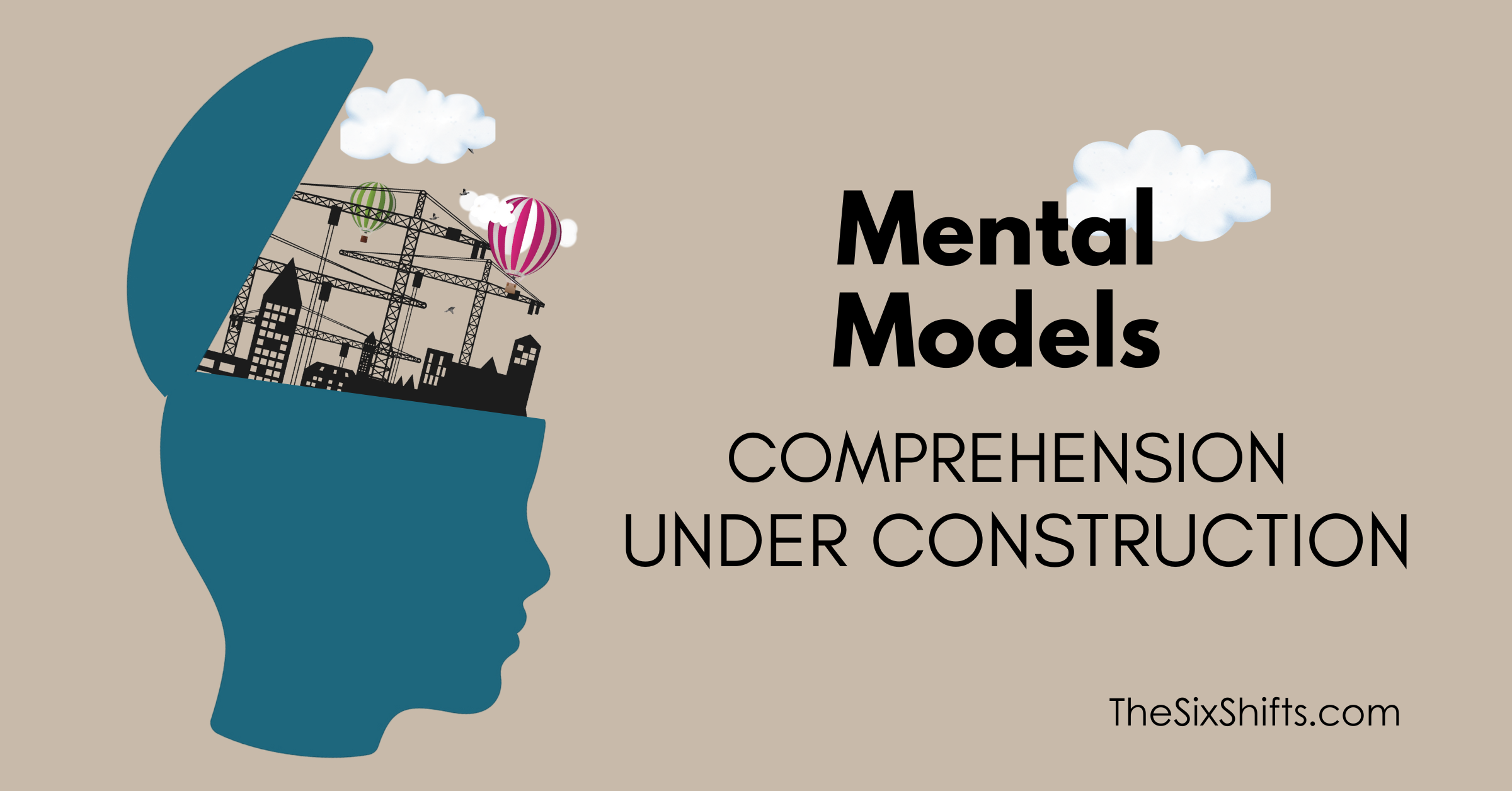
This may seem pretty obvious, but comprehension strategies are essential for reading comprehension. That means comprehension doesn’t happen without them. These strategies happen inside the brain and are automatic for proficient readers. Reading strategies are essential to building a mental model of a text, which is really the backbone of comprehension.
For example, noticing connections between ideas in a text—analyzing the text’s structure—is an essential strategic process for comprehension. On the other hand, highlighting words that indicate a paragraph’s structure—same as, different, in comparison, like, etc.—is not practicing a comprehension strategy, even though it may be an important study skill or scaffold for learning to pay more attention to a text’s structure. This is because highlighting is not essential for comprehension (hence, not a strategy), and neither is identifying key words. However, tuning in to the relationships and connections between words, sentences, phrases, and paragraphs in a text—the organizational structure (whether highlighting or not)—is super ESSENTIAL, so it’s a strategy!
Confusing, right? Because of this and other confusion around the term strategy, we refer to these powerful strategic processes—which are essential for comprehension—as thinking moves, rather than as strategies.
Which reading comprehension strategies, or thinking moves, are most important?
… there are a few strategic moves that really stand out in the research–actions that readers can take to help themselves comprehend. These are the moves that proficient readers constantly make, but that less proficient readers may need more time to practice. (p. 48)
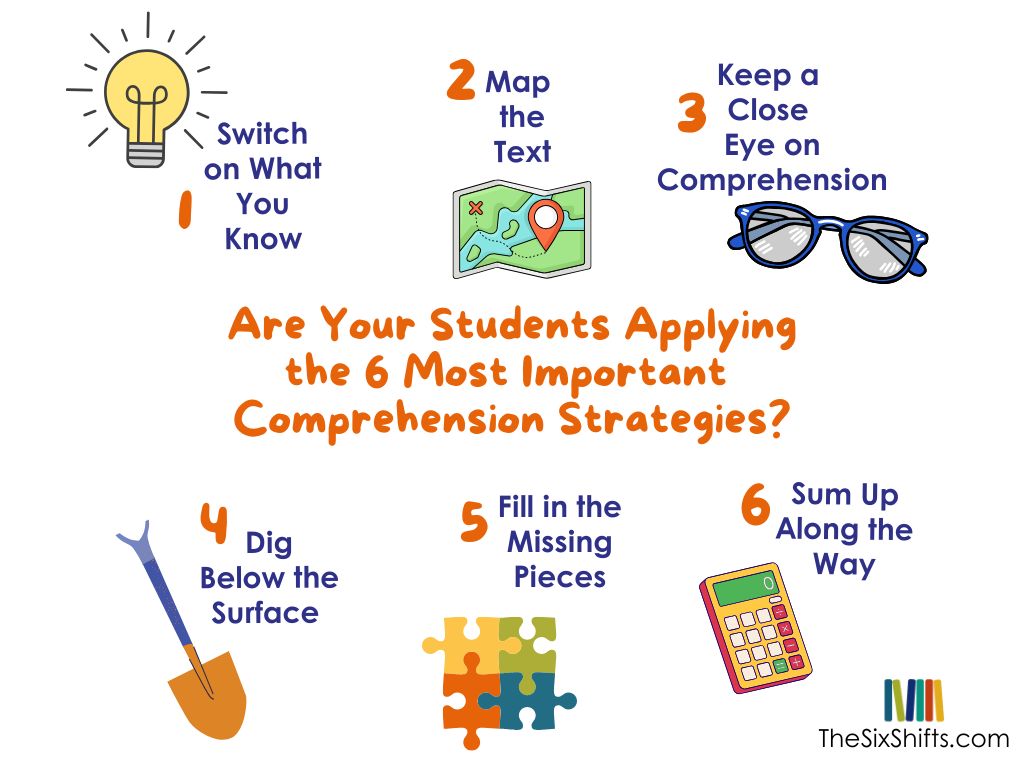
In the sections that follow, we describe each of the Strategic Six Thinking Moves, which are the reading comprehension strategies that reading research consistently points to as essential for readers to build mental models of the texts they read.
Meet The Strategic Six Thinking Moves: The Essential Strategic Processes for Reading Comprehension
Strategic Thinking Move #1: Switch on What You Know (Activating Background Knowledge)
Strategic Thinking Move #2: Map the Text (Noticing Text Structures)
Strategic Thinking Move #3: Keep a Close Eye on Comprehension (Monitoring Comprehension)
Keeping a close eye on comprehension is about paying attention as you are reading and building (and revising) understanding as you connect new information to what you have already read. This constant thinking enables you to notice when something doesn’t make sense. The ongoing, internal process of monitoring understanding is what helps you notice when you incorrectly read, “She had a really big house, so it could run for a long time,” and then reread the sentence correctly with the correct word, horse.
Strategic Thinking Move #4: Dig Below the Surface (Ask and Answer Questions)
Digging below the surface is about thinking deeply as you read. It involves engaging with the ideas in the text and asking and answering your own questions as they arise. Digging below the surface is also about more than answering comprehension questions at the end of a text; rather, it includes the constant questioning, searching, and thinking that make reading active. It’s about REALLY engaging with a text, so much so that you notice your own curiosity, connect ideas, reflect, arrive at new insights, and stretch or even change your thinking.
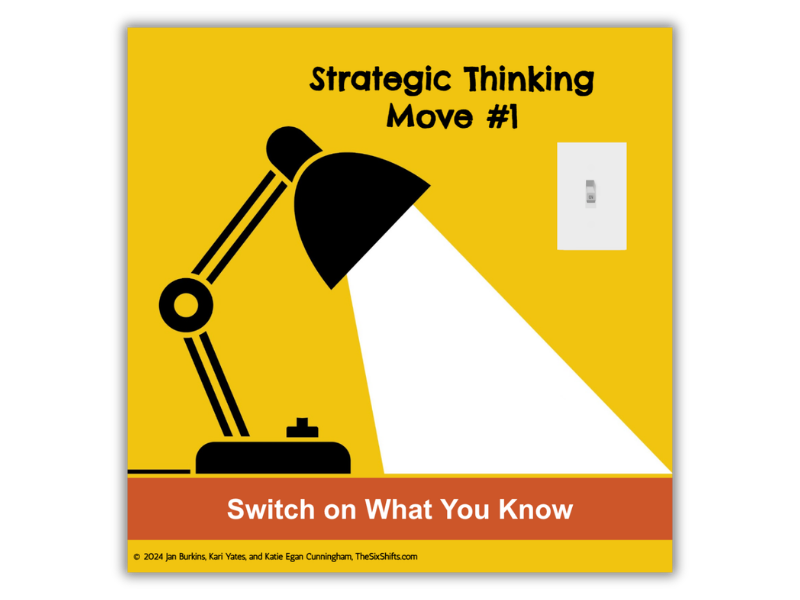
Strategic Thinking Move #5: Filling in the Missing Pieces (Inferring)
Filling in the missing pieces is about understanding what the author doesn’t explicitly say in the text. It’s about filling in any information that has been left out for the sake of efficiency and brevity. Filling in the missing pieces is more than occasionally stopping to notice an obvious leap in ideas in the text; we fill in missing pieces constantly. These inferences help you understand that a recipe that tells you to “cook on high” is suggesting that you turn on the stove rather than hold the pot high in the air. You understand that when the text describes the winner of the race as “on fire,” the figurative language doesn’t imply an emergency.
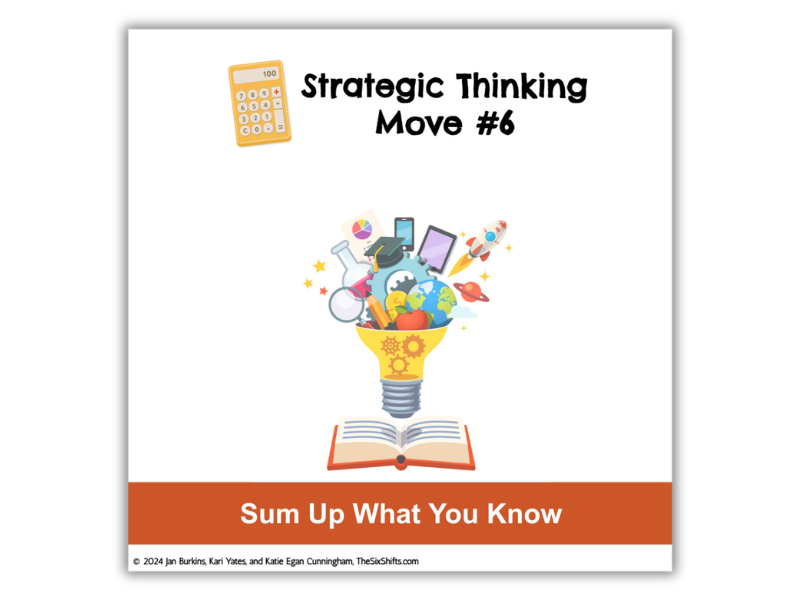
Strategic Thinking Move #6: Sum Up What You Know (Summarizing Along the Way)
Summing up what you know is about constantly processing, connecting, and reflecting while reading. It involves saying to yourself over and over, “Here’s what I know so far.” Additionally, you should end the reading experience by understanding the big ideas and overall essence of the story or topic. Summing up what you know is not about writing a formal summary at the end of reading. Rather, it is about the informal, cumulative work of building a mental model, expanding and revising as new information is added with each new word, phrase, or sentence. Summing up also requires making lots of on-the-run decisions about which details to prioritize and which to let go. It is a dynamic, ongoing, and recursive process.
Putting Them All Together
Together, these six thinking moves comprise the strategic actions that students must master to become proficient comprehenders of text. But they aren’t easy to compartmentalize or sort out in connected reading. That’s because, rather than being distinct and separate, the Strategic Six Thinking Moves overlap and depend on one another. For example, you can’t “Fill in the Missing Pieces” unless you “Switch on What You Know.” And “Mapping the Text” will help a reader “Keep a Close Eye on Comprehension.” So, you can expect this work to be a bit messy, and that’s okay. The point is not to learn the strategies or even to label thinking moves in action. Rather, the goal is to give students a cache of powerful tools they can leverage to build an accurate mental model of the text they want to understand.
The Strategic Six can give you a fresh way to talk with students about reading comprehension strategies, while also narrowing their focus to those thinking moves that really matter.
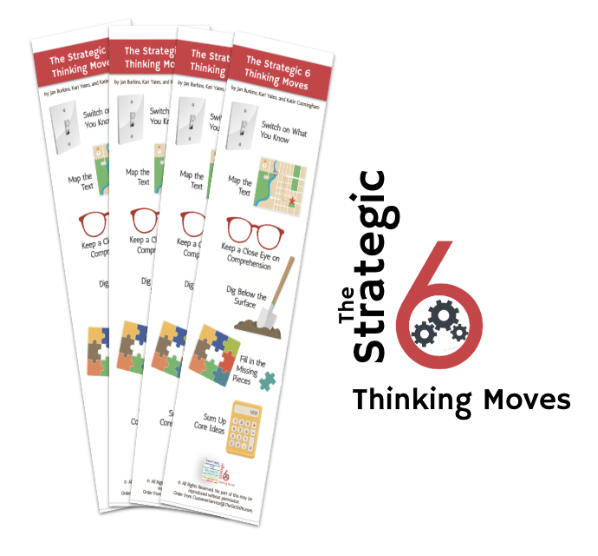
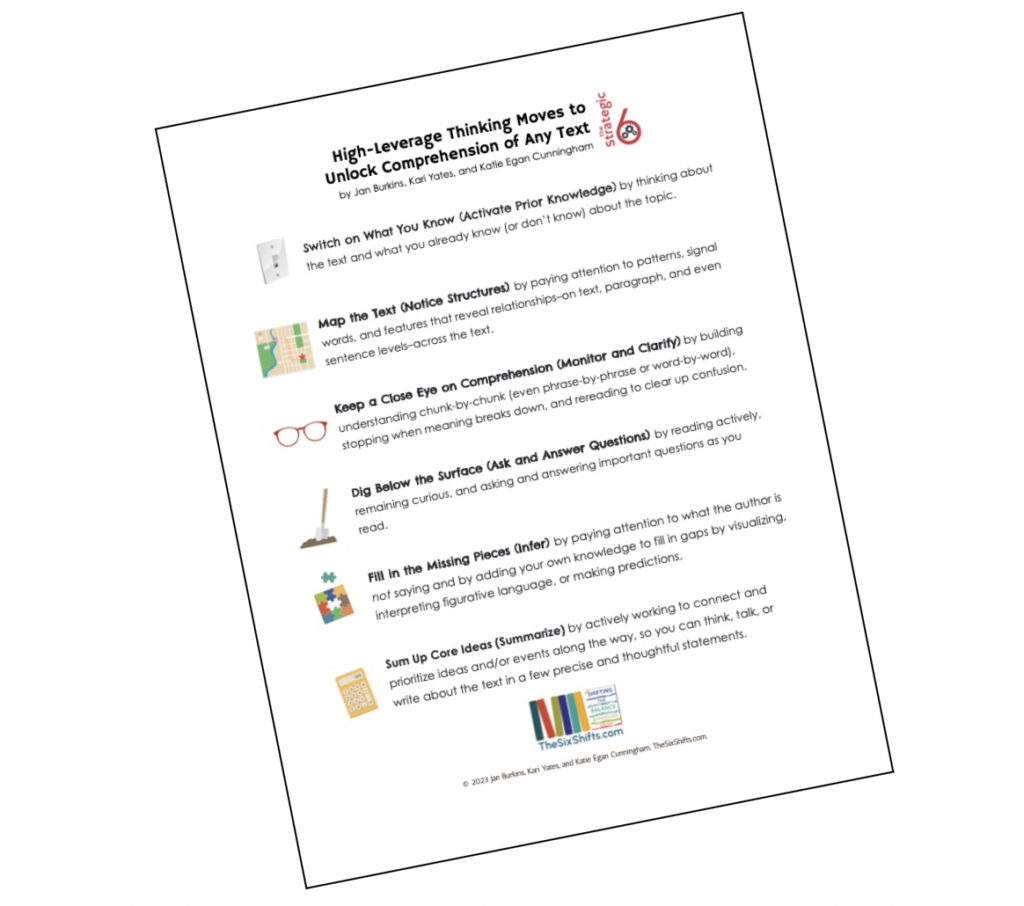
You can download a printable version of bookmarks of The Strategic Six Thinking Moves here. And a student one-pager that explains each thinking move here.
And if you’re ready to consider a shift in your approach to reading strategy instruction, including a much deeper exploration of the Strategic Six Thinking Moves, we invite you to check out the book and online class we created with Katie Egan Cunningham, Shifting the Balance: Bringing the Science of Reading into the Upper Elementary Classroom.
-
Jan Burkins and Kari Yates are authors, speakers, and consultants, who are dedicated to helping teachers around the world translate reading science into simple instructional moves that help teachers make learning to read easier for their students while still centering meaning-making, engagement, and joy.
1 Comment
Reading strategies are thinking strategies students need to learn and use to comprehend texts. Color coding and test taking strategies are not reading strategies.