
Over the last several years, phonics instruction has received renewed attention in schools across the country.
Curricula have been revised.
Professional learning has expanded.
Teachers have worked hard to align instruction with what we know about how children learn to read.
And that's a good thing.
For far too long, foundational skills often received less attention than they deserved. Today, most educators recognize the importance of systematic and explicit phonics instruction. Those ideas have helped shape curriculum decisions, professional learning, and classroom practice in meaningful ways.
But it's worth pausing for a moment to ask an important question: Have we gotten it right?
Because phonics is a critical part of early literacy instruction. But it isn't the entire literacy block.
Students also need opportunities to build vocabulary, develop language comprehension, engage in meaningful reading and writing, and build knowledge about the world. Every instructional minute is precious.
As schools continue strengthening phonics instruction, it's worth taking a fresh look at what research tells us matters most.
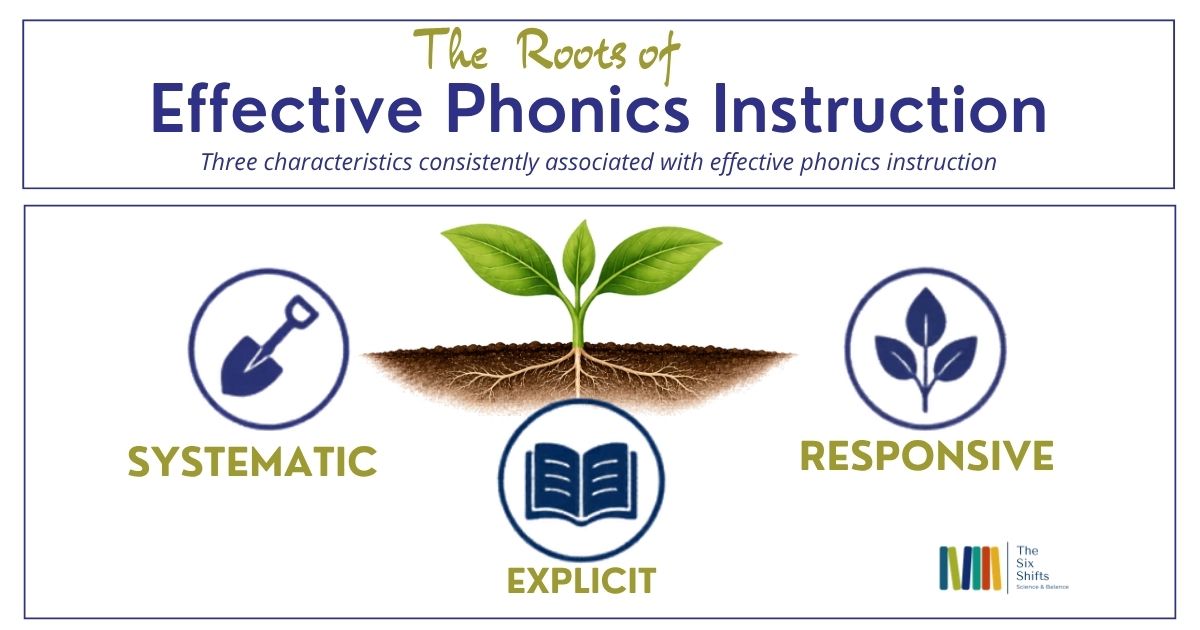
While researchers may disagree on some aspects of literacy instruction, there is remarkable consistency around several key characteristics of effective phonics teaching.
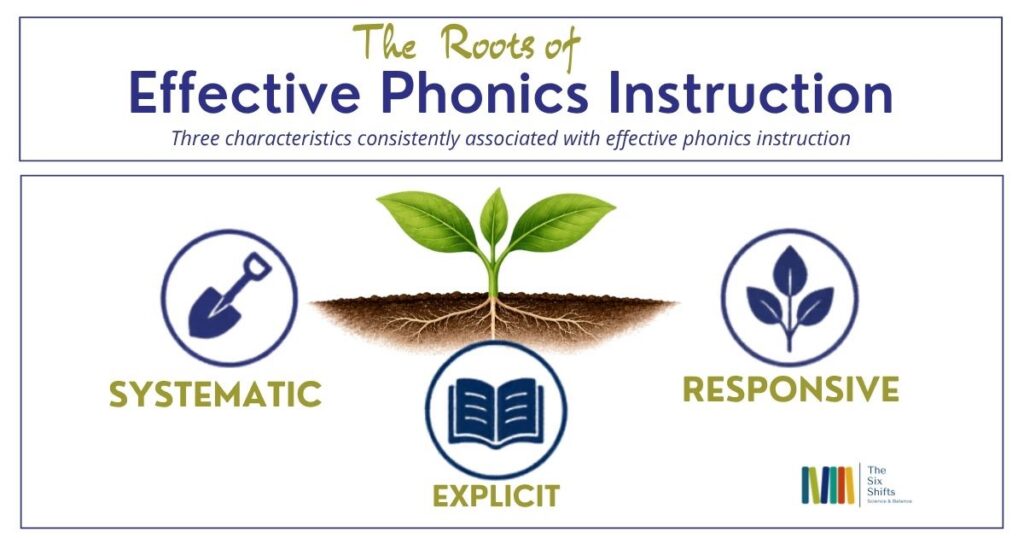
Effective phonics instruction is:
- Systematic
- Explicit
- Responsive
And while the first two characteristics receive much of the attention, it's the third that often determines whether instruction is truly a match to student needs. Today, we'll take a closer look at all three.
What is systematic phonics instruction?
When researchers talk about systematic phonics instruction, they're talking about instruction that follows a thoughtful, gradual plan for learning. Students aren't expected to learn every phonics skill at once. Instead, skills are introduced over time in a way that allows new learning to build upon what students already know.
But it's important to understand what systematic instruction does and does not mean.
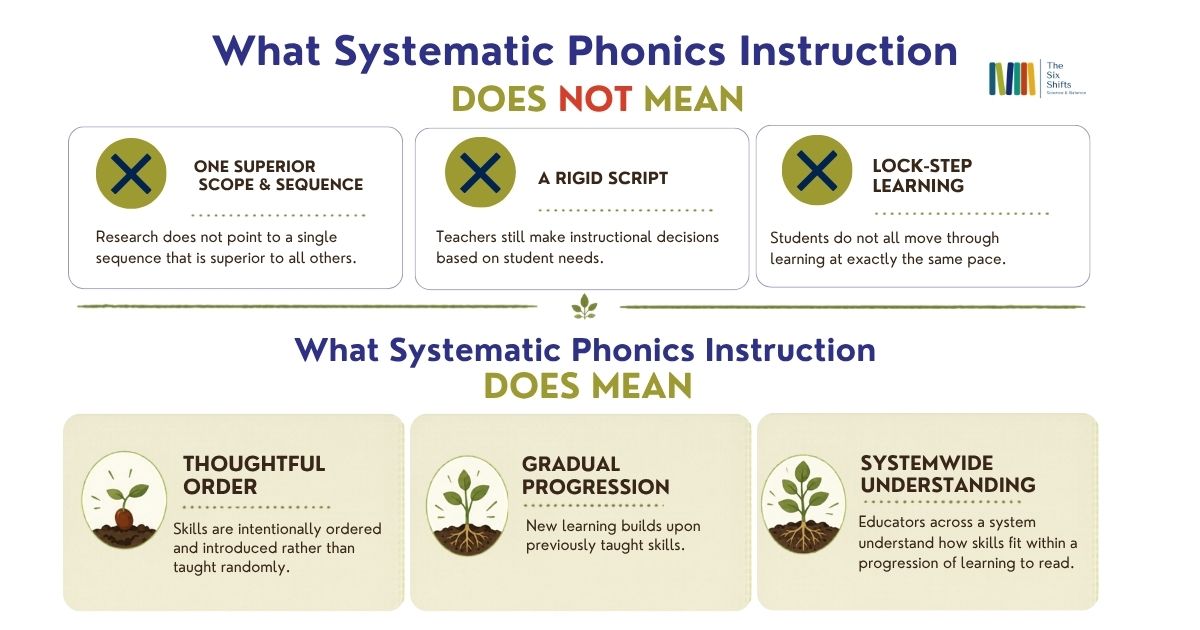
Research strongly supports systematic instruction, but it does not point to a single scope and sequence that is superior to all others. What matters most is that instruction moves from simpler concepts toward more complex ones and provides opportunities for students to continually build and connect new learning.
In many ways, systematic instruction can be thought of through three lenses:
Thoughtful Order
A scope and sequence provides a roadmap for instruction. The scope identifies what skills will be taught. The sequence identifies the order in which those skills will first be introduced.
Notice the phrase first introduced. The goal is not to march students through a rigid sequence without regard for their needs. The goal is to ensure that instruction is intentional rather than random.
Gradual Progression
Students benefit when new learning builds upon previously taught skills. Research consistently shows that phonics instruction is more effective when skills are introduced gradually, allowing students to connect new learning to what they already know.
This doesn't mean students must demonstrate perfect mastery before encountering new learning. It means instruction is designed so that knowledge accumulates over time.
Systemwide Understanding
Perhaps the most overlooked aspect of systematic instruction is that everyone in the system understands the progression:
- Kindergarten teachers
- First-grade teachers
- Interventionists
- Special educators
- Upper elementary teachers
Because decoding difficulties don't disappear when students leave the primary grades. In fact, older students with unfinished foundational skills often struggle with concepts that trace back to the earliest stages of phonics development.
One of the most common examples is the closed syllable pattern, often introduced through CVC words. Even in the upper grades, students who struggle with multisyllabic word reading are sometimes still experiencing difficulty with the short vowel patterns that form the foundation of early decoding development.
When educators share an understanding of the larger progression, they're better able to identify where breakdowns may be occurring and what support students may need next.
A strong scope and sequence doesn't guarantee learning. But it provides an important roadmap. And like any good roadmap, it helps ensure that important steps aren't skipped along the way.
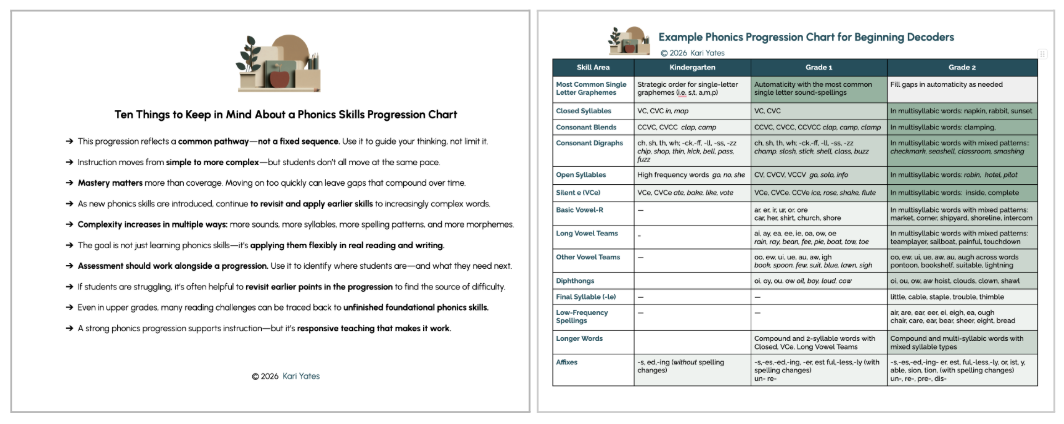
🗺️ Phonics Progression Starting Point
Looking for a roadmap? This example phonics progression chart provides a clear roadmap of foundational skills to help guide instruction for beginning decoders.
What is explicit phonics instruction?
Research also supports explicit instruction. Students learn more efficiently when teachers clearly explain new concepts, model their thinking, provide guided practice, offer feedback, and gradually release responsibility to students. In other words, strong phonics instruction is about providing unmistakably clear instruction.
It includes:
- Clear explanations
- Clear modeling
- Clear routines
- Clear feedback
- Clear opportunities to practice and apply new learning
Experts like Anita Archer and Wiley Blevins have long emphasized the importance of explicit instruction in helping students develop accurate and automatic word-reading skills.
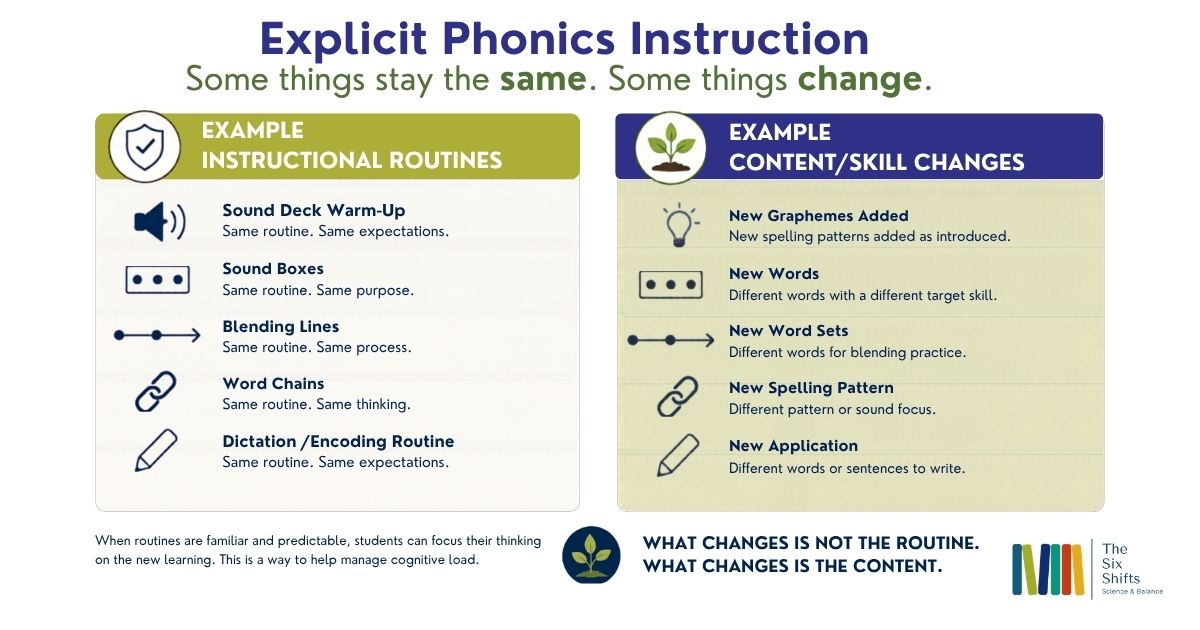
And here's some good news. A common misconception about phonics instruction is that teachers need an endless supply of new activities and lessons. But in reality, the opposite is true. Students benefit from instructional routines that are familiar and predictable.
When the routine remains consistent, students can devote their attention to the new learning rather than figuring out what they are supposed to do. It’s one important way to help them manage cognitive load.
In other words, the goal isn't novelty. The goal is clarity.
What teachers need is not a thousand phonics activities. They need a toolkit of high-leverage instructional routines they know well and can apply across many different phonics skills. Examples might include:
- A sound spelling deck warm-up
- Sound boxes to support phoneme-grapheme alignment
- Blending lines that provide practice with sets of carefully selected words
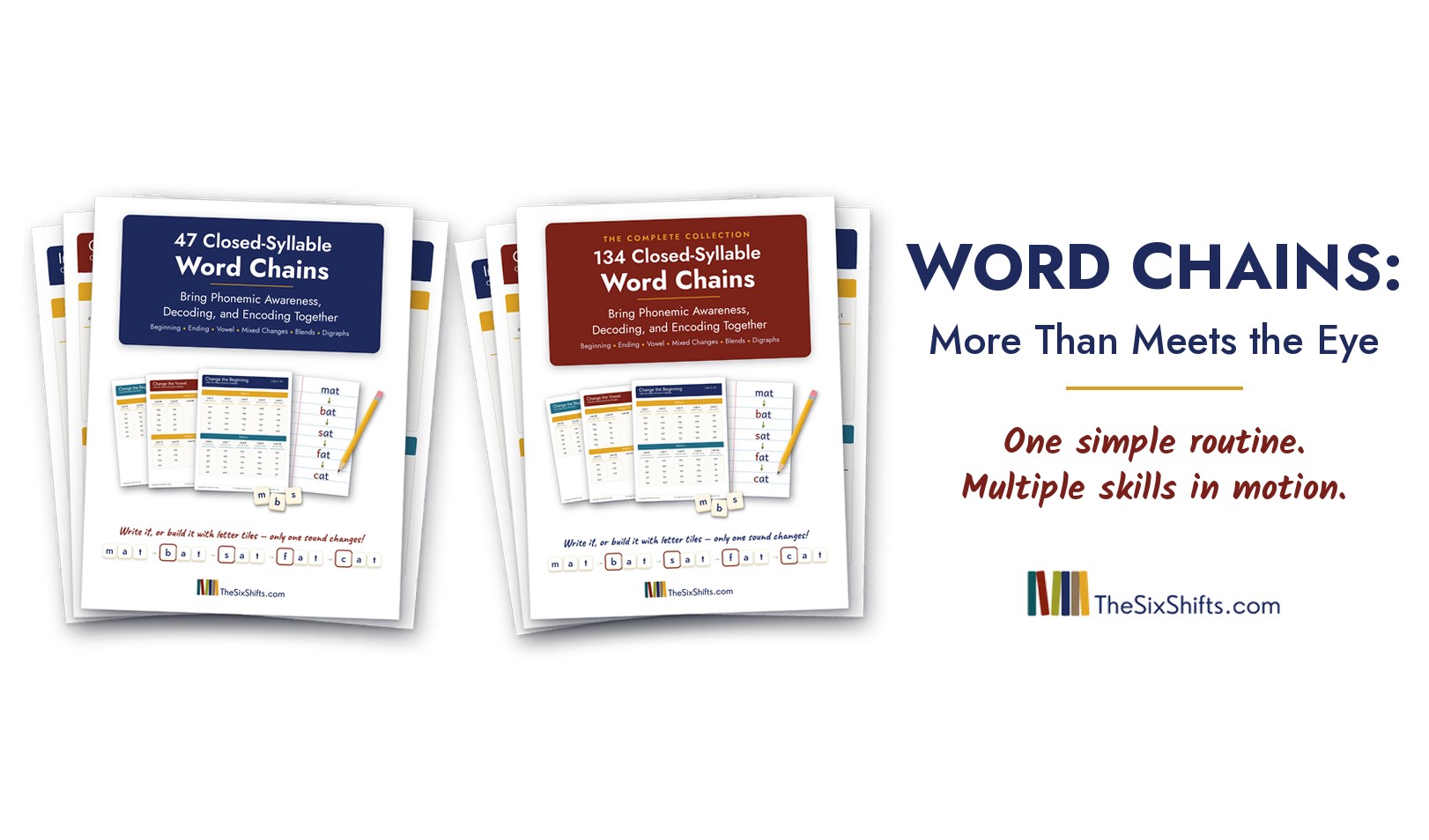
- Word chains that encourage students to analyze changing sounds and spellings
- Sound sorts and spelling comparisons that help students notice patterns
- Dictation and encoding routines that connect reading and writing
The most effective phonics instruction is often built on a relatively small number of versatile routines used consistently over time. Strong phonics programs tend to include the same core structures again and again. What changes is not the routine. What changes is the content.
Explicit instruction also depends on precise academic language. Students benefit when we are very precise and consistent using terms such as letter, sound, grapheme, phoneme, spelling pattern, syllable, and morpheme. Clear language helps create clear thinking. And clear thinking helps students build accurate understandings of how our written language works.
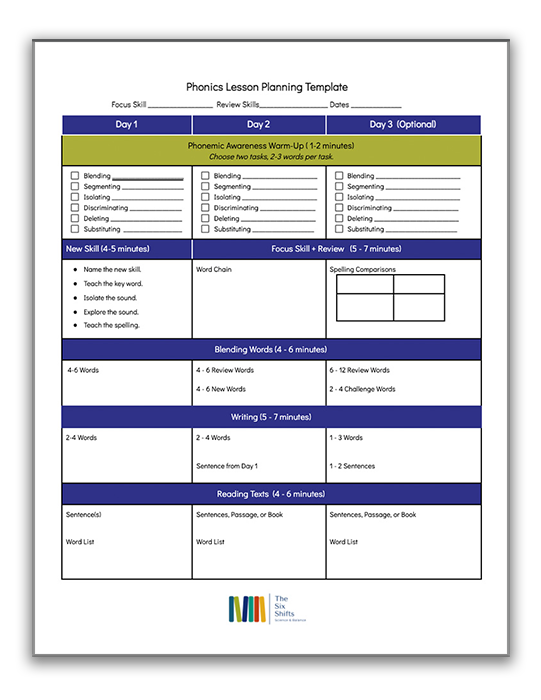
📝 Lesson Structure Guide
What changes is not the routine. What changes is the content. Download this Explicit Phonics Lesson Template to see how consistent instructional structures can support new learning across a wide range of phonics skills.
What is Responsive Phonics Instruction?
But effective phonics instruction is not only systematic and explicit. It is also responsive.
This where teaching becomes dynamic. Because students don't all move through learning at the same pace. Some need more time. Some are ready to move ahead. Some need reteaching in a small group, while others are ready for an additional challenge.
Responsive instruction acknowledges that while the destination may be shared, the path students take to get there is not always the same.
Importantly, responsive instruction does not mean abandoning a scope and sequence or teaching skills randomly based on moment-to-moment observations. The roadmap still matters. The progression still matters. Responsive teaching simply recognizes that students will not all arrive at the same place at the same time.
As Wiley Blevins has written:
"When you adopt a 'mastery focus,' it changes the way you teach, write lessons, and assess a skill. Once a skill is introduced, you are in it 'for the long haul' and don't give up until all of our students can successfully apply the skill to authentic reading and writing experiences, weeks or months after the introduction."
But a mastery focus should not be confused with a gatekeeping approach to instruction. Students can continue participating in grade-level learning while also receiving additional support on skills that are not yet secure.
In other words, responsive teaching doesn't require us to choose between moving forward and meeting student needs. It requires us to do both. And that's where assessment enters the picture.
Not as a separate event. Not as a compliance, but as an ongoing source of information that helps teachers make instructional decisions.
Responsive instruction isn't a single instructional move. It's a cycle.
We assess to understand what students know and can do. We use that information to plan instruction. We differentiate based on student needs. Then we assess again to determine whether students are ready to move forward or need additional support.
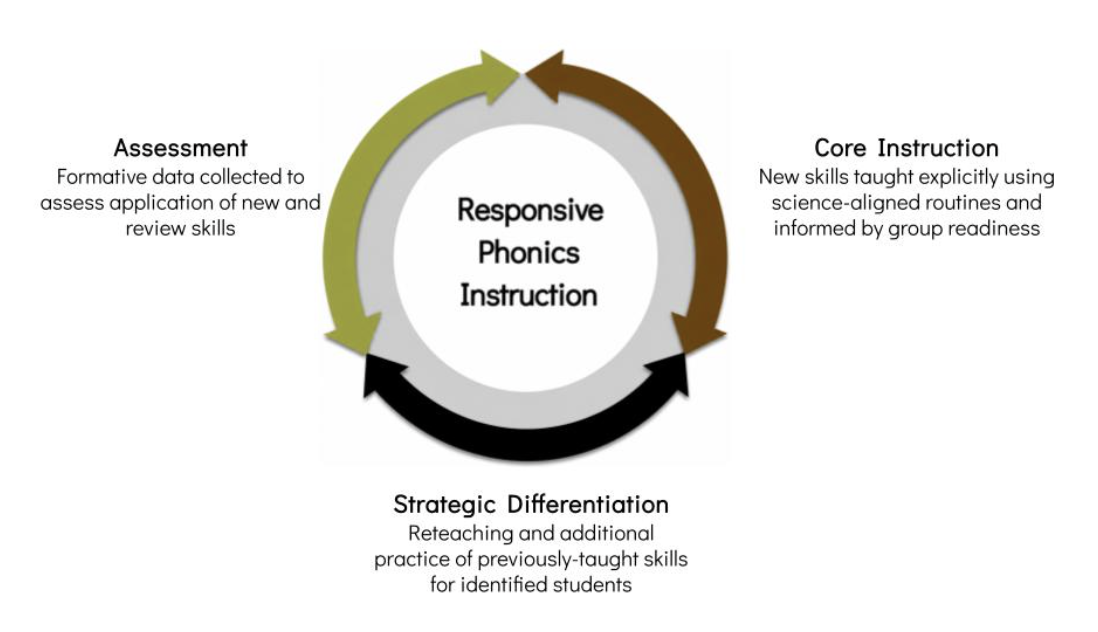
Notice that assessment flows both ways in the cycle. It informs whole-group instruction. It informs strategic differentiation. It helps teachers decide when to reteach, when to provide additional support, and when students are ready for the next step.
In other words, assessment isn't separate from responsive teaching. It's what makes responsive teaching possible.
And while assessment isn't the focus of this article, it plays a critical role in enabling responsive instruction.
Systematic and Explicit Phonics Instruction? Absolutely. But We Can't Stop There.
Over the last several years, schools have made important strides in strengthening phonics instruction. And that's worth celebrating.
But effective phonics instruction is about more than increasing the amount of phonics we teach. It's about ensuring that the time we spend on foundational skills is intentional, efficient, and responsive to student needs.
- Systematic instruction gives us a roadmap.
- Explicit instruction helps us teach clearly.
- Responsive instruction helps us decide what students need next.
Together, these three characteristics help ensure that phonics instruction serves its intended purpose: helping students become increasingly accurate, automatic, and confident readers and writers.
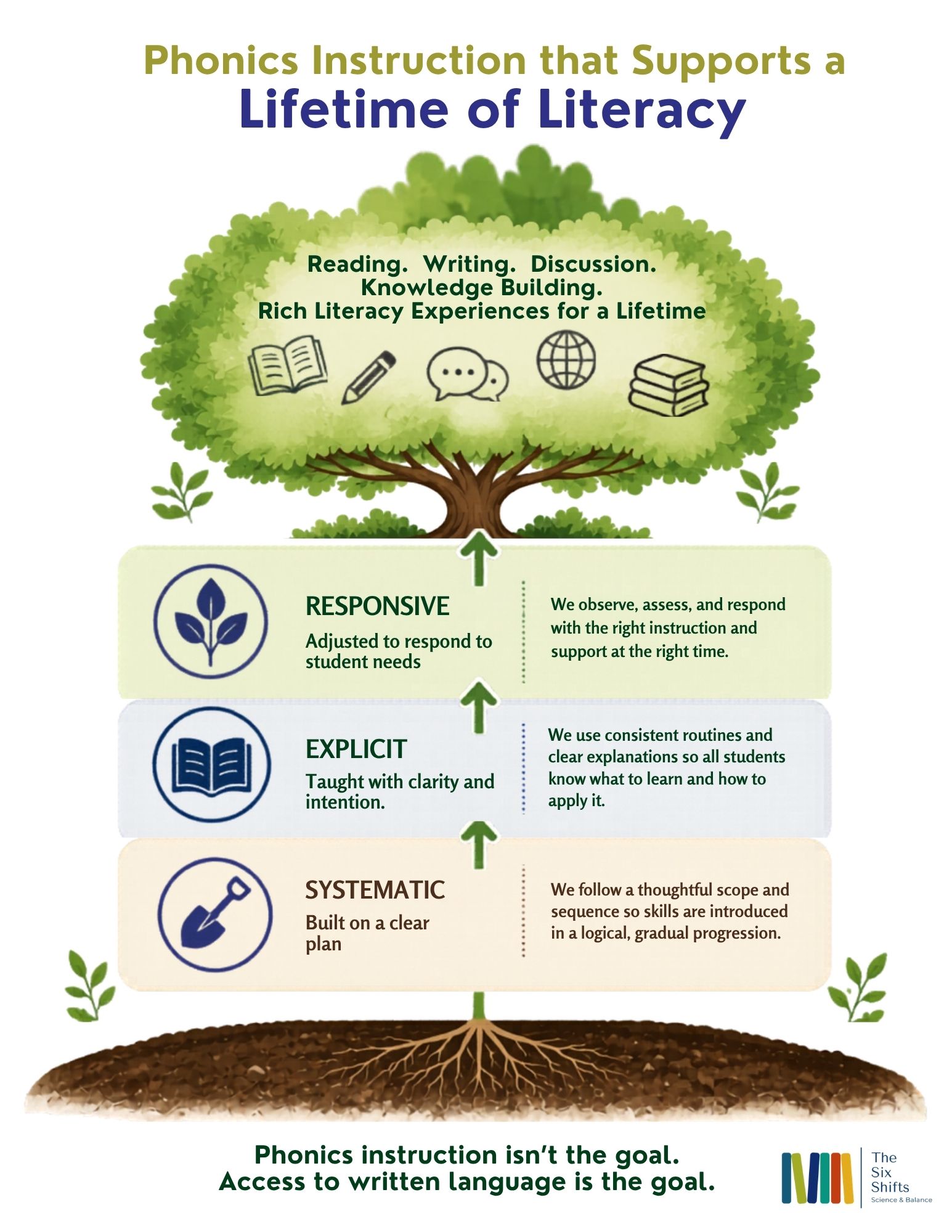
The answer isn't found in choosing between phonics and the rest of literacy. It's found in ensuring that phonics instruction is systematic, explicit, and responsive enough to help students access everything else.
Because the goal was never phonics for phonics' sake. The goal is to help students develop the foundational skills they need to fully participate in a rich array of literacy and language experiences for a lifetime.
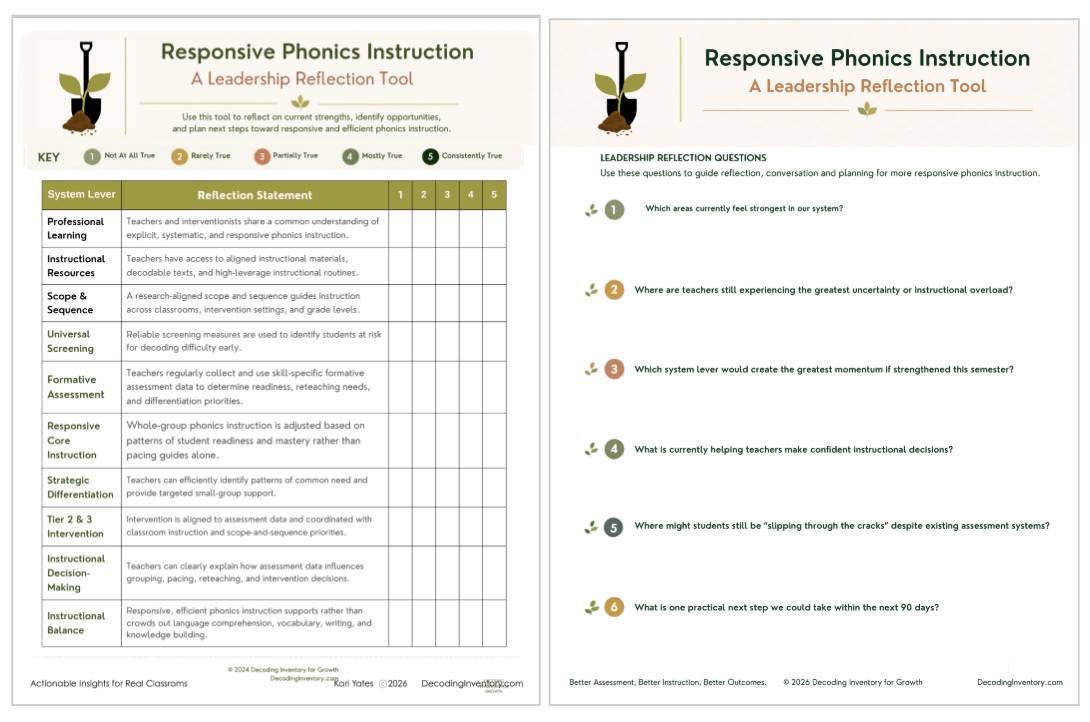
🛠️ Leadership Reflection Resource
Looking for a way to reflect on your school's current phonics practices? Download our free Leadership Reflection Tool to identify strengths, uncover opportunities for growth, and support meaningful conversations with your team.
References
- Archer, A. L., & Hughes, C. A. (2011). Explicit Instruction: Effective and Efficient Teaching. Guilford Press.
- Blevins, W. (2017). A Fresh Look at Phonics, Grades K–2: Common Causes of Failure and 7 Ingredients for Success. Corwin.
- Blevins, W. (2023). Choosing and Using Decodable Texts: Practical Tips and Strategies for Developing Skilled Readers. Scholastic.
- Castles, A., Rastle, K., & Nation, K. (2018). Ending the reading wars: Reading acquisition from novice to expert. Psychological Science in the Public Interest, 19(1), 5–51.
- Ehri, L. C. (2014). Orthographic mapping in the acquisition of sight word reading, spelling memory, and vocabulary learning. Scientific Studies of Reading, 18(1), 5–21.
- Foorman, B. R., Beyler, N., Borradaile, K., et al. (2016). Foundational Skills to Support Reading for Understanding in Kindergarten Through 3rd Grade (IES Practice Guide). Institute of Education Sciences.
- Moats, L. C. (2020). Speech to Print: Language Essentials for Teachers (3rd ed.). Paul H. Brookes Publishing.
- National Reading Panel. (2000). Teaching Children to Read: An Evidence-Based Assessment of the Scientific Research Literature on Reading and Its Implications for Reading Instruction.
- Shanahan, T. (2020). The National Reading Panel: A Brief Retrospective. Perspectives on Language and Literacy.
- Tomlinson, C. A. (2014). The Differentiated Classroom: Responding to the Needs of All Learners (2nd ed.). ASCD.