

On This Page
- Last week, we shared 5 adjustments that can help you bring small-group instruction for early decoders more in line with your other shifts to early literacy instruction. If you missed it, you can find that post here.
- We hope that you have taken some time this week to jump in with exploring one or more of those tweaks to your small-group design and implementation as you work to strengthen your differentiated instruction for developing readers.
- Today, we offer five more adjustments to consider when designing small-group instruction that will ultimately make learning to read easier for your students.
- Rather than analyzing reading patterns based on the sources of information the reader used (Did the error make sense? Did it sound right? Did it look right?), the shift is to zoom in on the specific types of decoding errors children make (after all every error is a decoding error!). For example, when trying to decode, does a student have trouble with the initial or final blends, digraphs, specific vowel patterns, or even blending sounds to arrive at a word they know? You will also want to look for and document phonemic awareness red flags–such as trouble blending.
- Rather than choosing texts that stand alone, you can (when possible) select texts that connect to topics students are learning about in read-aloud or shared reading. Background knowledge and vocabulary are essential to comprehension. Whenever you can make them, these connections to whole-group learning can help students expand their language comprehension. For example, if you are studying amphibians in science, bringing in a text about frogs can help build children’s deep lexical quality for words like hibernate or shed. Of course, these connections aren’t always possible, so don’t sacrifice decodability or language comprehension for content connections in small-group.
- Rather than relying primarily on independent reading or word work, the change is to intentionally include even more meaningful ways for students to strengthen both strands of Scarborough’s rope–word recognition and language comprehension (“balance” really makes sense here!). This can include rich language tasks, such as playing a picture card analogy game with a friend, listening to a recorded text, and responding through retelling or discussion. As for strengthening word recognition skills, students might use orthographic mapping cards to practice reading and writing tricky high-frequency words. Or they might play a “How many sounds?” game by indicating the number of sounds in a word pictured on a card. Of course, as soon as students know enough about how words work, independent work should include opportunities for writing and reading practice from their decodable texts. In a previous post, we offered this favorite partner routine, “Let’s play teacher,” to strengthen word reading and writing skills.
- We hope this list of possible adjustments to your small-group instruction has given you some things to mull over and even some things to try.
- Of course, this list isn’t meant to be the end-all-be-all list for better aligning your small-group instruction to brain-friendly practices. But we do hope that it gives you some jumping-off points so that you can get momentum going.
- Meaningful change happens one next step at a time. So, pick a starting point that feels both powerful and doable. Muster your courage–attend to both your head and your heart–and begin to shift.
- If you don’t have a clear and thoughtful scope and sequence for phonics instruction in place yet, that’s your starting point. Get together with your colleagues and your leadership to begin to explore options.
- If you don’t have the assessment data you need to create groups based on foundational skills, you might start by looking for a simple phonics inventory or by implementing weekly spelling dictation.
- If you have been relying solely on leveled texts, you might start by looking for some decodable texts (you may even find some tucked away in closets or hidden cabinets) and consider how they align with your phonics scope and sequence.
- Finally, if you aren’t really sure what more skills-driven small-group instruction might look like, we have a lesson template for explicit phonics instruction. In fact, we just completed an 8 -blog series on how to effectively utilize this tool to meet your students’ needs.
- Overwhelm is real, especially when it comes to rethinking core practices. But you can overcome decision fatigue by identifying one doable action and moving forward.
- And if you found this blog helpful, you might also enjoy our online class. It extends the content in our book, Shifting the Balance: 6 Ways to Bring the Science of Reading into the Balanced Literacy Classroom.
- The class will help you untangle common misunderstandings about early literacy instruction and provides critical but manageable starting points for more brain-friendly practice. You can learn more about Shifting the Balance: The Online Class here.

Your next step
Step 1 · Free download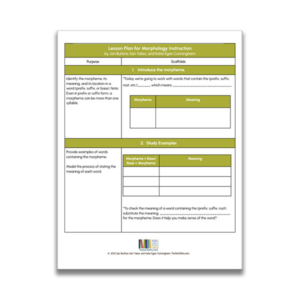 Morphology Instruction Lesson Planning TemplateA step-by-step planning template to help students look within words for morpheme clues, connect related words, and develop…Get it free →Step 2 · Classroom tool
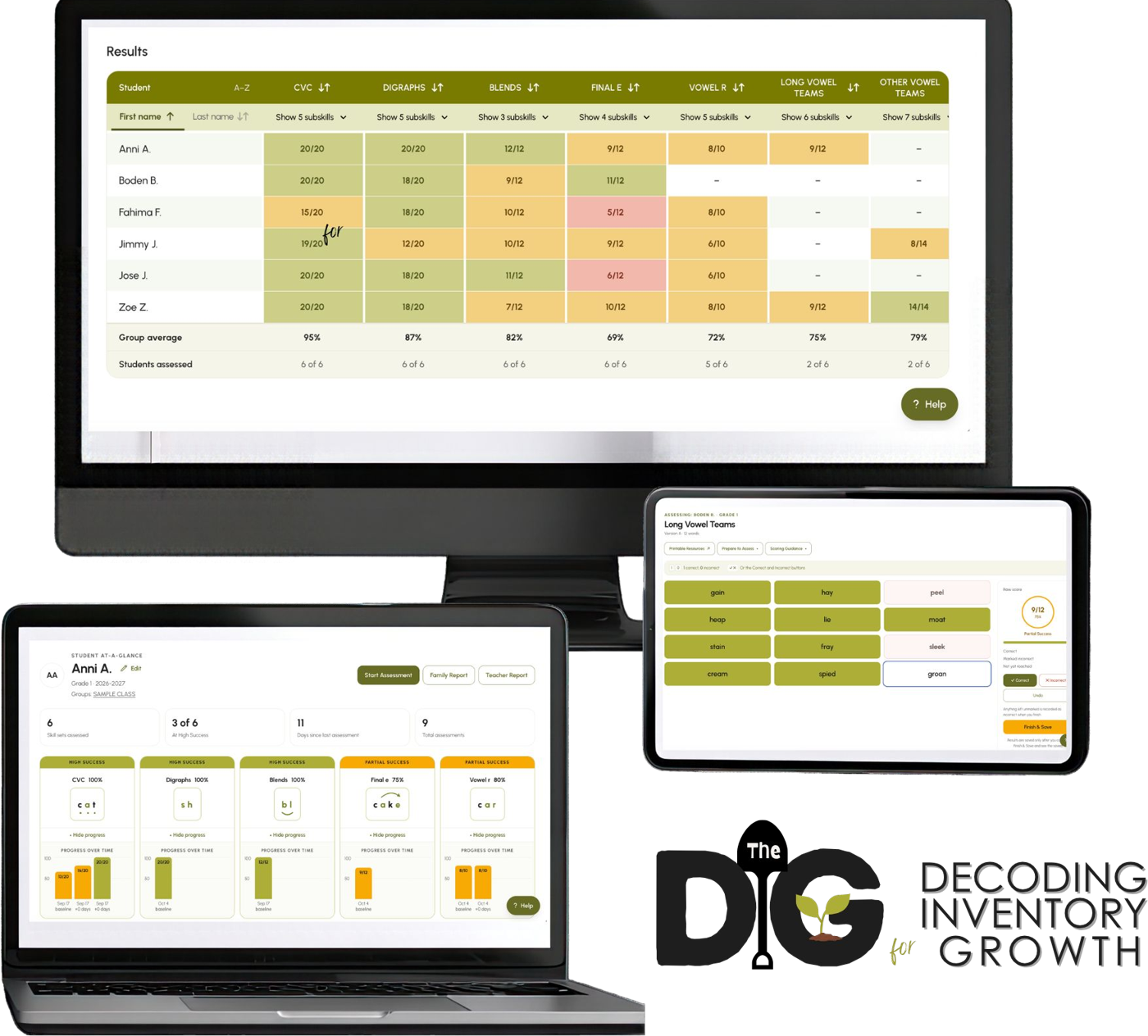 The D.I.G.Find out exactly which part of decoding is breaking down, and what to teach next.See the D.I.G. →
Morphology Instruction Lesson Planning TemplateA step-by-step planning template to help students look within words for morpheme clues, connect related words, and develop…Get it free →Step 2 · Classroom toolThe D.I.G.Find out exactly which part of decoding is breaking down, and what to teach next.See the D.I.G. →