
In the history of our alphabetic language system, spoken language came long before written symbols. If students can’t understand the language of the text spoken, they won’t be able to comprehend it when they read it. Basically, students need to be able to understand the ideas in a text if you read it aloud to them. Otherwise, they are not going to understand it when they read the words on their own.
Unfortunately, intentional language comprehension instruction is not the norm in schools, partly because it’s hard to measure. If you want a little anecdotal evidence of this fact, ask yourself, “What percentage of the reading interventions in our school are specifically for language comprehension?” Odds are, unless students are learning English, few (if any) of the students who need language comprehension interventions are actually getting them.
Students answer questions or discuss the text in ways that are superficial or only get at the gist of the text, rather than constructing strong meaning connections. They guess at or overgeneralize the meanings of words they don’t know. Even when they read the word correctly, they may attribute the meaning to a similar-sounding word—think shimmying vs. shimmering—which can make them quite confused about what is going on in the text.
- 1. Get serious about explicit and implicit vocabulary instruction.
- 2. Provide repeated exposure to targeted Tier 2 words throughout the day.
- 3. Use semantic mapping to compare the new word to similar and related words.
When readers don’t have enough prior knowledge about a topic, they’re less able to generate reasonable inferences or make sense of what’s happening—even when they can decode all the words and understand their surface meanings. This is because texts often leave things unsaid, expecting the reader to “fill in the blanks” using experience, schema, and conceptual understanding.
So, comprehending requires readers to draw on what they already know about the world, the topic, and how things work. In fact, they can’t learn from a text unless they already know something about the subject they are reading about. This may seem counterintuitive, but research has shown again and again that background knowledge plays a critical role in making inferences, filling in gaps, and connecting ideas across a text. As the cognitive scientist Daniel Willingham famously put it, “Comprehension depends on having something to think about.”
You might notice that students struggle to explain why something happened in the text, or they make wild guesses that show a lack of grounding in the topic. They may answer inferential questions in ways that are disconnected from the story or overly vague. For example, if a text says a character puts on gloves and a scarf, a student without background knowledge might say, “She’s going to a party,” instead of inferring that it’s cold outside.
Sometimes, students will stop reading to ask about things that seem obvious if you have the background knowledge you need. They may misinterpret situations entirely because they’re missing the cultural or conceptual framework to understand them.
Teachers may also notice that these same students struggle more with nonfiction or content-area texts, especially those related to science, social studies, or history. In discussion, they may listen quietly or offer answers that rely heavily on surface details or recall, avoiding deeper explanation or reasoning.
- 1. Build essential background knowledge intentionally, before students read the text.
- 2. Use think-alouds to model inferring (but be judicious; it’s easy to overuse think-alouds).
- 3. Scaffold with sentence frames: “I think ___ because ___.”

Reading comprehension is an active, meaning-making process that requires readers to direct their attention toward what matters most in a text. Skilled readers don’t just pass their eyes over the words—they engage with the ideas, track key details, and prioritize information that helps them build a cohesive understanding. But when students read without a clear purpose or without being taught how to monitor their understanding, they often struggle to construct meaning.
Sometimes students treat reading as an assignment to complete rather than a message to make sense of. They may read accurately, but their attention is scattered or unfocused. Instead of tracking the flow of ideas or thinking about what the author wants them to understand, they might fixate on a small detail or move through the text without mentally connecting the parts. Without intentional direction of attention, comprehension breaks down—not because of a lack of ability, but because of a lack of cognitive engagement.
From a scientific standpoint, this is an issue of attention and executive functioning: what are students attending to, and how are they prioritizing that attention? Without intentional instruction and repeated modeling, many students don’t learn to ask themselves, “What matters here?” or “Is this helping me understand the author’s message?”
Students may summarize a text by focusing on a small or quirky detail instead of the central idea. They may not really think about the meaning of the text until they finish reading and then reach the follow-up questions. These students have come to believe that reading comprehension is answering the questions at the end of a chapter or passage. They think comprehending is something you do at school or for a teacher. Because they rely more on memory than on constructed, cumulative meaning, they may be more likely to offer answers from the beginning or end of the passage, which are more memorable because of primacy (beginning) and recency (the end).
These students may also struggle to answer open-ended comprehension questions, offering vague or off-topic responses. In discussion, they might mention what the character did, but not why it mattered—or they might remember an event but miss its connection to the rest of the story. They may read passively and quickly, not because they can’t read, but because they haven’t developed the habit of reading for meaning.
What’s most telling is that their answers may sound plausible but miss the point. It’s not that they can’t comprehend—it’s that they aren’t aiming their comprehension efforts in the right direction.
- Teach text structure (e.g., problem/solution, compare/contrast) and support students in noticing how all the parts of the text work together.
- Use graphic organizers to help students process and connect the parts of a text during reading.
- Stop during reading often to ask: “How does this connect to what we read earlier? Now, what do you know/understand/wonder?”
Fluent reading is a bridge between word recognition and comprehension. When students read with accuracy, appropriate rate, and prosody (phrasing, expression, and intonation), they free up cognitive resources to focus on meaning. But when reading is effortful or choppy, even students who can technically decode may struggle to understand what they’re reading—simply because too much of their mental energy is going into saying the words instead of processing them.
Reading fluency isn’t just about speed—it's about automaticity. The brain must recognize words quickly and effortlessly so it can allocate attention to making sense of the ideas. When fluency is weak, comprehension often suffers—not because the student lacks vocabulary or background knowledge, but because their working memory is overloaded by the basic task of reading the words.
Importantly, fluent oral reading also supports internal comprehension monitoring. Students who can read smoothly are more likely to notice when something doesn’t make sense, whereas students who are struggling to get the words out may just keep pushing forward, unaware that their understanding has broken down.
You might hear students reading aloud with frequent pauses, word-by-word phrasing, or without intonation that matches the meaning. After reading, these students may not be able to retell the story or answer comprehension questions—even if they pronounced most, or even all, of the words correctly.
They may also misplace emphasis, grouping words unnaturally or skipping over punctuation, which disrupts their grasp of the text’s meaning. In independent reading, these students may avoid longer or more complex texts, or they may “fake fluency” by reading quickly but with low expression and little comprehension. In writing or discussion, their thinking about the text may seem thin, even though they were “able to read it.”
Keep in mind that, while there’s a high correlation between fluency and comprehension, it’s entirely possible for fluent readers to have difficulty with comprehension. They may look and sound proficient, yet they still have to dedicate too many cognitive resources to reading the words. It’s like they are treading water and working hard under the surface, even though they look fine.
- 1. Have students read the same short passage multiple times (aloud or silently) with a specific focus each time—first on accuracy, then on phrasing, then on meaning (summarizing as they go along).
- 2. Read a sentence or short passage aloud with appropriate phrasing and expression, and then have students read that same sentence or passage, mimicking the teacher’s expression, emphasis, and phrasing.
- 3. Let students prepare and “perform” (read in unison in front of the class) a short section of text using expressive reading that matches the character’s emotions, tone, or intent.
The Six Shifts Content Corner
When students repeatedly experience reading as a surface-level activity—answering literal questions, filling in blanks, or racing to finish a passage—they develop habits of mind that avoid deep thinking. This isn’t usually a comprehension skill problem; it’s a learned pattern shaped by repeated practice. Cognitive science tells us that the brain adapts to what it’s asked to do often, building stronger and stronger neural pathways that support the practiced behavior until it becomes automatic. If students are consistently prompted to decode, recall, or respond without reflection, they will build automaticity in shallow reading behaviors.
A common and well-intentioned example of this is word work that lacks engagement with meaning. When students routinely read lists of decodable words or practice phonics patterns without any discussion of what those words mean or how they might show up in a real sentence or story, they start to associate reading with saying words rather than understanding them. Over time, this can contribute to a view of reading as purely mechanical—a task of decoding symbols, not constructing meaning.
Deep comprehension, on the other hand, depends on metacognition—the ability to monitor, question, and direct one’s own thinking while reading. If students haven’t been supported to pause, ask themselves questions, or reflect on what they understand, they may not realize that reading involves these habits. It’s not just that they don’t do it—they may not even know that they’re supposed to. And once they realize they need to do it, they have to fight with the established neural pathways that support word-calling.
In discussion, these students may listen passively or offer "safe" responses—ideas that sound right but don't show evidence of real interpretation. They often struggle when asked to infer, explain a theme, or connect parts of a text together, not because they can’t comprehend, but because they haven't built the habit of thinking about the text while reading it. When prompted with open-ended questions, they may freeze, offer guesses, say, “I don’t know,” or give answers that are technically correct but conceptually shallow. Over time, these patterns can mask a deeper problem: students may be decoding well, following directions, and completing assignments—but not building the internal cognitive habits that support authentic comprehension.
- 1. Use think-alouds to show what deep thinking sounds like—including moments of uncertainty, self-questioning, or revision. Make visible how good readers linger on meaning, not just move through text.
- 2. Pose prompts like “Why do you think the author included this?” or “What’s something this character is realizing?” Encourage multiple answers and follow-ups, such as “Say more about that.”
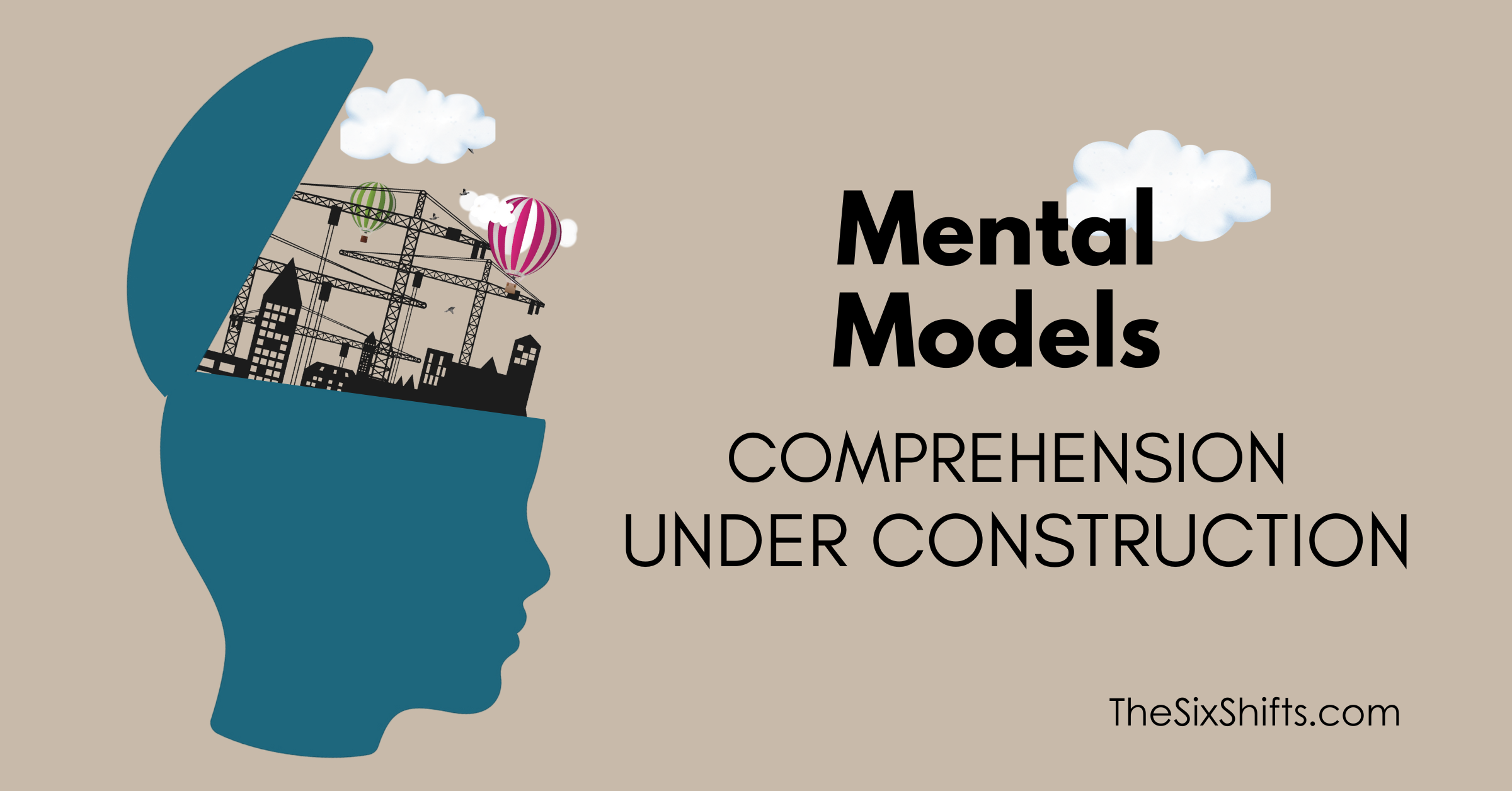
- 3. Teach students about mental models and explain that their mental model should “update” with each word they read.
Shifting the Balance: The Online Class (3-5)

Comprehension depends on the brain’s ability to hold and integrate information across a stretch of text—often over several sentences, paragraphs, or even pages. When students can’t keep track of what they’ve just read, they lose the thread of the story or argument and can’t build a cohesive mental model of the text. This is often tied to working memory limitations: the ability to temporarily store and manipulate information while processing new input.
Even students who decode accurately and understand individual sentences may lose their grip on the meaning if they forget the preceding ideas or can’t hold onto multiple pieces of information at once. This is especially true with more complex texts that include shifts in time, multiple characters, unfamiliar concepts, or layered sentence structures. Without explicit support in holding onto and organizing meaning, many students—particularly those who are developing readers or have executive functioning challenges—may understand bits and pieces but struggle to make sense of the text as a whole.
Students who struggle with this challenge often start strong in a reading task but lose their way midway through a passage or task. They may begin to summarize a story and then stop abruptly, saying something like, “I forgot what happened before,” or offer explanations that trail off or skip over key ideas. These students may show a solid understanding of a sentence or paragraph in isolation, but can’t explain how different parts of the text connect or build on each other.
During discussions, their comments may jump between details without cohesion or focus too heavily on one part of the text. They may confuse characters and events or shuffle timelines. They may also repeat the same point, showing that they haven’t retained enough information to expand or elaborate. In written responses, you might notice underdeveloped ideas or summaries that feel fragmented or incomplete—signs that they are reading in pieces, rather than integrating across the whole.
- 1. Use strategic stopping points during reading to prompt students to summarize what’s happened so far, helping them pause and hold onto the thread of meaning.
- 2. Offer visual scaffolds such as reader’s notebooks, story maps, timelines, or boxes-and-bullets note-taking to reduce working memory load and help students organize key ideas.
- 3. Build stamina and memory for meaning with short, high-frequency routines like partner retells, “turn-and-teach,” or sticky-note tracking to keep students actively engaged with what they’re learning.