First Grade Heart Words: Finding and Teaching the Words That Matter Most
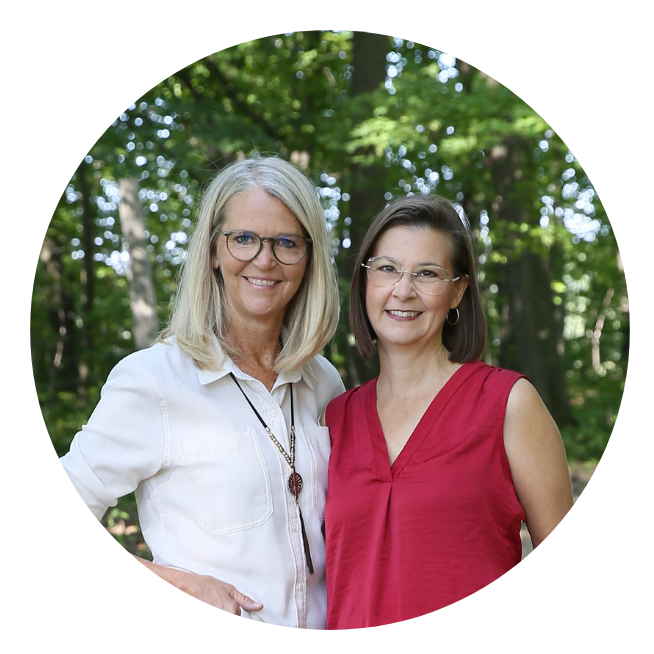
Jan and Kari
By first grade, most children are well on their way to becoming skilled “word learners.” With foundational phonics and blending under their belts, they’re ready to take on a larger set of high-frequency words. This is when explicit instruction—especially with words that don’t follow the rules—becomes critical.
Enter: heart words ♥️
High-frequency words that include at least one sound-spelling relationship that’s unexpected or irregular are often referred to as heart words. These words can be tricky for students because some part of them doesn’t match up with what they’ve been learning in phonics. In heart words, those unexpected spellings—or “heart parts”—are marked with a heart.
You’ve likely heard of heart words and may have even introduced the concept to your students. But here’s what matters most:
Heart words aren’t memorized by heart—they’re learned through orthographic mapping. The heart simply draws student attention to the “heart part” (or hard part) of the word.
—Kari Yates and Dr. Jan Burkins
Our goal in word mapping is not memorization but building instant, automatic retrieval by understanding the relationship between sounds and spellings. This happens through word analysis that leads to orthographic mapping. (If you’d like to better understand orthographic mapping, you might want to check out this post).
The 109 Power Words and First Grade Heart Words
Irregularly spelled words like was, said, and would show up constantly in children’s texts. They may not follow predictable phonics patterns, but they’re everywhere—which means students need to learn them early and learn them well.
So, which high-frequency words are most important to teach in first grade?
To simplify instruction, we recommend starting with our 109 Power Words list—a frequency-ranked list of the words children are most likely to encounter in print. But the real power of this list goes far beyond frequency rankings. Once you know a few key insights, you’ll see why we call these words “power words.”
The words are organized by frequency. Word #1—the—is the most frequently used word in the English language. (Did you notice it appeared three times in that one sentence?)
Insight #2
The first 13 words on the list (the, of, and, a, to, in, is, you, that, it, he, for, was) make up about 25% of all the words in print. In other words, if your students know these 13 words, they can already recognize one out of every four words they’ll ever read. If there are students who haven’t yet mastered these, that’s the place to start.
Insight #3
The entire list of 109 Power Words (and their most common derivatives) makes up more than 50% of the words children will see in books. That’s right—half the words in children’s texts come from this one list. Once students have the first 13, it makes sense to keep going.
Insight #4
When combined with basic phonics knowledge, the 109 Power Words give students access to about 90% of the one-syllable words they’ll encounter in their early texts. In other words: phonics instruction + high-frequency word instruction = powerful reading success.
From Exposure to Ownership: Why Lexical Quality Matters
Introducing high-frequency words is just the beginning. What we really want is for students to build strong lexical representations—mental word “files” that include a word’s sound, spelling, and meaning.
A strong lexical quality enables the reader to do three things:
1. Instantly recognize the word in print
2. Accurately spell it in writing
3. Understand and use it in context
Think of lexical quality as a picture coming into focus. Each time a child engages with a word—through reading, writing, or analysis—the brain sharpens its awareness of that word’s sounds, spellings, and meaning.
So, how do we help students build strong representations of the high-frequency words they don’t yet recognize automatically?
Enter the APT framework.
Three Steps for Heart Word Success: APT = Assess. Prioritize. Teach.
APT is a simple but powerful framework we teach in ourHeart Word Success Mini-Course. It helps you decide what to teach, to whom, and how.
🅰 Assess
Before you can decide what to teach, you need to discover what your students already know.
Assessment can be simple:
• Can the student read the word instantly?
• Can they spell it accurately?
• Do they understand how the sounds and spellings connect?
You might use dictation, a reading inventory, or a quick check of the 109 Power Words list. Our Heart Word Success Toolkit includes multiple assessment tools. Regardless of the tool, you’ll use this information to do the following:
• Group students by need
• Track progress over time
• Focus instruction on the words that matter most
🅿 Prioritize
Once you know which words students need, it’s time to prioritize.
These questions can help you decide where to start:
• Frequency: Which words show up most often in texts? (Start with the lowest numbers on the list—#1 = the.)
• Decodability: Which words follow patterns already taught in phonics? (If fully decodable, these shouldn’t require individual instruction.)
• Irregularity: Which words contain “heart parts” that require explicit teaching? (Classic examples are said, the, and would.)
General rule of thumb: Give students the most useful words, as early as possible, with the right amount of support.
Now you’re ready to teach in ways that ensure long-term storage for instant, automatic retrieval.
Teach heart words in ways the brain loves:
1. Say the word aloud
2. Use it in a sentence
3. Stretch it to identify each sound (phoneme)
4. Map phonemes to graphemes
5. Mark irregular spellings (“heart parts”) with a heart
6. Write the word while saying the sounds
7. Re-read the word, checking sounds against spellings
8. Read, write, or construct a sentence containing the word
Some of our favorite tools for brain-friendly instruction:
• Sound boxes to visualize sound-spelling alignment
• Heart icons to mark tricky parts
• Whiteboards for practice
• Short decodable sentences with the word in context
And remember: fun is great—but flashy doesn’t equal effective. Rainbow writing, chanting, or visual-only memory games can’t compete with phoneme-grapheme mapping for long-term learning.
Wrap-Up: Mastering First Grade Heart Words With Heart
Heart words are not just high-frequency—they’re high-leverage. In first grade, mastering them can unlock more fluent reading, confident writing, and greater access to texts across the curriculum.
So keep it simple—and keep it smart—with the APT Process:
🅰 Assess what students already know
🅿 Prioritize the words that matter most
🆃 Teach for deep understanding and mapping
Every mapped word strengthens the student’s reading brain.
Jan Burkins and Kari Yates are authors, speakers, and consultants, who are dedicated to helping teachers around the world translate reading science into simple instructional moves that help teachers make learning to read easier for their students while still centering meaning-making, engagement, and joy.