
Decoding Inventory for Growth (D.I.G.) helps teachers turn phonics assessment into clear instructional action.
The D.I.G. is an easy-to-administer phonics assessment tool that helps educators collect meaningful data, identify student needs, and make more confident decisions about what to teach next.
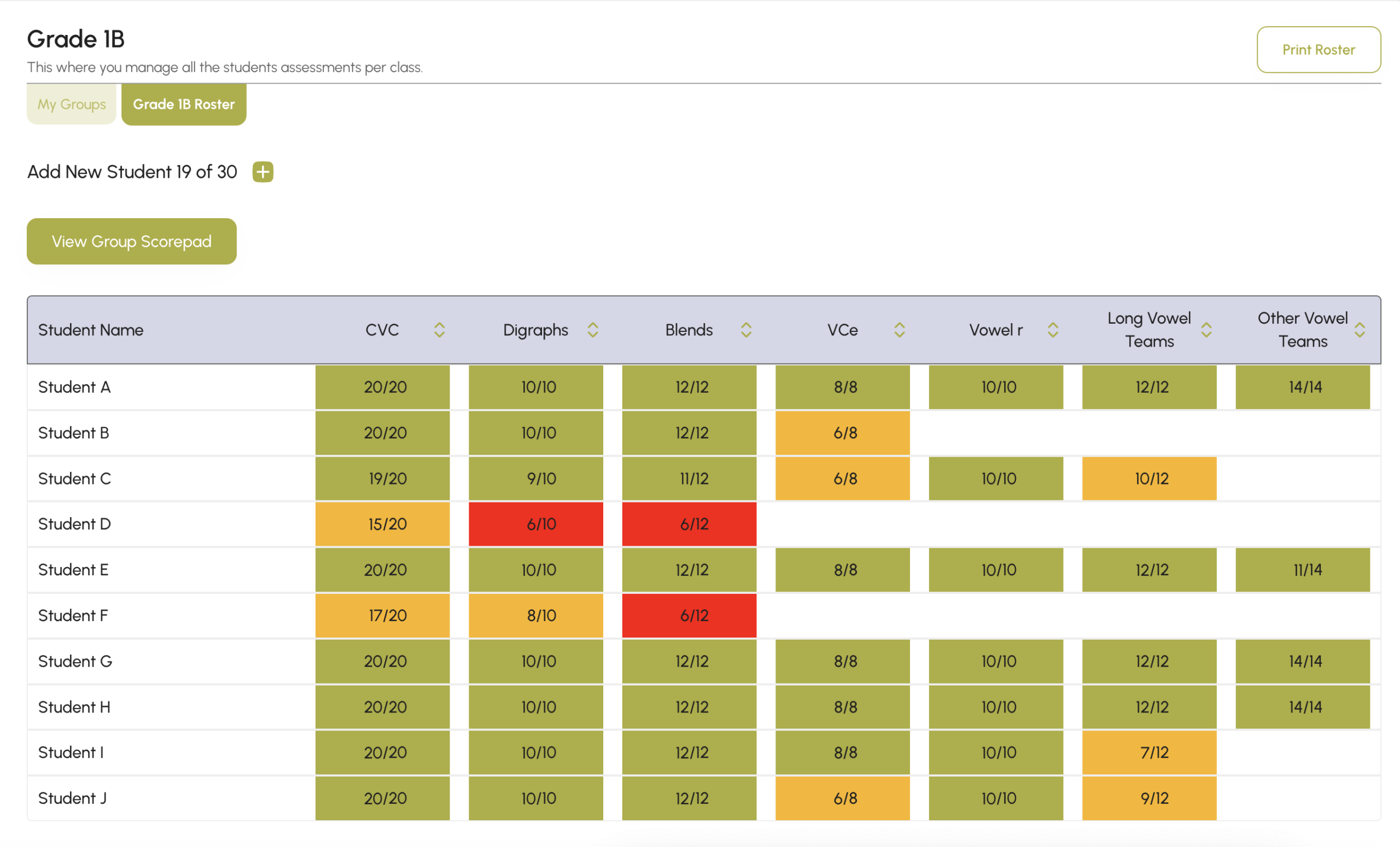
Instead of sorting through scattered notes, paper forms, or unclear scores, teachers can quickly see where patterns are showing up and how to group students for more targeted instruction.
Simple to administer.
Simple to score.
Simple to interpret.
The D.I.G. was designed to make phonics assessment feel more manageable, more useful, and easier to connect directly to instruction.

Simple to Administer
Use assessment in a way that fits real classroom routines without turning it into a major event.

Simple to Score
Move from student responses to usable data faster with less manual sorting and less friction.

Simple to Interpret
See what students need, where patterns are forming, and what instructional next steps make sense.
Clearer phonics data leads to clearer instructional decisions.
Start Using The D.I.G.See the shift from scattered data to clear instructional direction.
The D.I.G. helps teachers move from uncertainty and time-consuming planning into a clearer, more confident way to respond to student needs.

Data everywhere.
Clarity nowhere.
- Paper forms scattered across your desk
- Scores that still need interpretation
- Small groups that take too long to plan
- Too much guessing about who needs what
Turns assessment data into direction

You know what to teach, who needs it, and where to focus.
- Clear student strengths and needs
- Groups based on actual skill gaps
- Instructional decisions made faster
- More confidence in every next step
“I finally feel clear on what to teach—and why.”
Before The D.I.G., I had data, but I didn’t feel confident using it. I was constantly second-guessing my groups and spending too much time trying to figure out next steps.
Now I can actually see what my students need. My groups are more targeted, planning feels faster, and I feel much more confident in the instructional decisions I’m making.

Everything you need to assess, understand, and respond.
The D.I.G. brings phonics assessment and instructional decision-making into one clear system, so you can move from data collection to targeted support with less friction.

Easy-to-Administer Assessments
Assess individual students or groups with a system designed to fit real classroom routines while protecting instructional time.
Clear Insight Into Student Strengths & Needs
Quickly see which skills are secure, where support is needed, and what students are ready to learn next.
Whole-Group vs. Small-Group Clarity
Spot class-wide patterns and targeted skill gaps so instructional decisions become clearer and more strategic.
Student Grouping by Skill Need
Group students based on specific phonics needs rather than broad reading levels or unclear assessment scores.
Progress Monitoring Over Time
Track growth across the year, monitor changes in skill development, and adjust instruction with confidence.
Organized Assessment Data in One Place
Keep student data, assessment results, and progress monitoring organized without piles of paper or scattered notes.
